Laboqueria
Arquitectura

Redó

Cradle to Cradle for materials recirculation

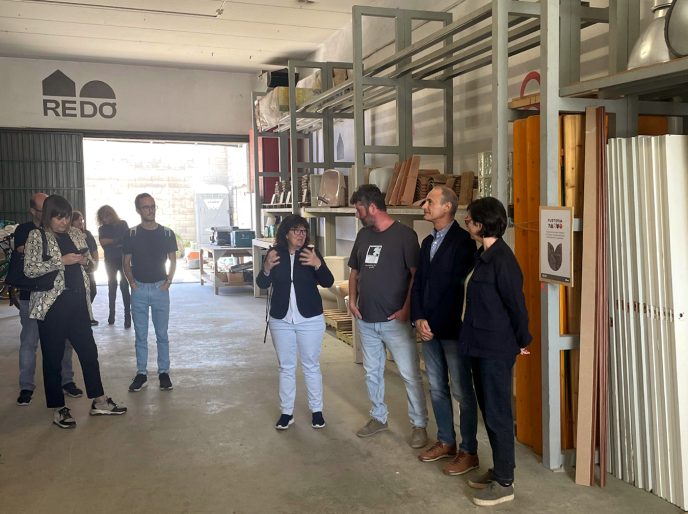
The construction industry has historically been one of the largest generators of waste on our planet. For decades, the model has been linear: extract, manufacture, build, and demolish. But what if we could break that cycle? At Laboqueria Arquitectura, we’ve decided to stop seeing “rubble” and start seeing resources.

Under this premise, REDÓ was born, a social and construction innovation program that focuses on the recirculation of materials following the Cradle to Cradle philosophy. REDÓ is not just an environmental strategy; it’s a management model that seeks to minimize the impact of our projects while generating a positive return for society and the region.

Territori de Vincles

Rehabilitate to reverse rural depopulation

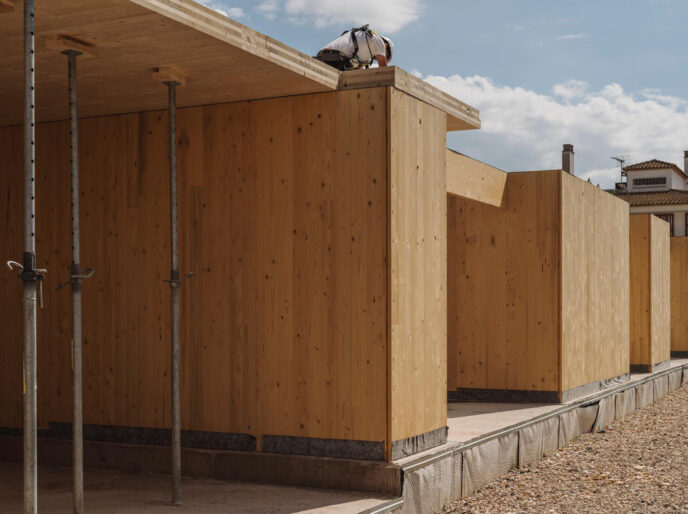
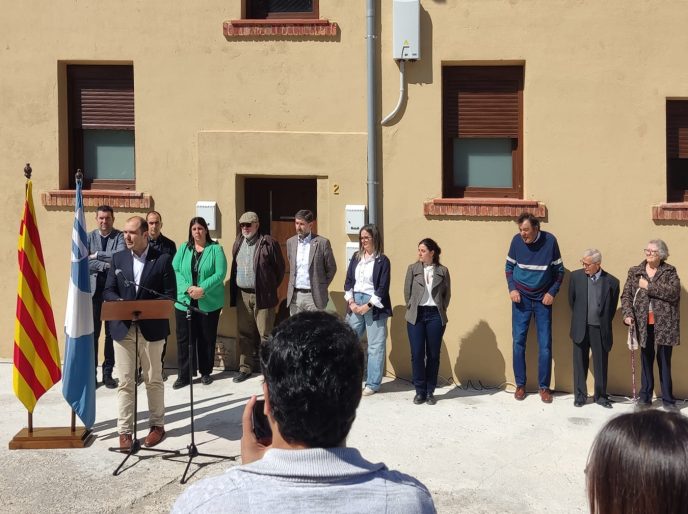
The municipality of Ciutadilla, in Urgell, has recently inaugurated eight official housing units in the former Civil Guard barracks. The intervention transforms a disused building into affordable rental housing, responding to a structural problem in the rural world: access to housing and the progressive loss of population.

This action is framed within a broader context of reflection on how to generate new opportunities for living in rural environments, based on the reuse of the existing built stock.

Mediterranean architecture

Constant learning from the built work

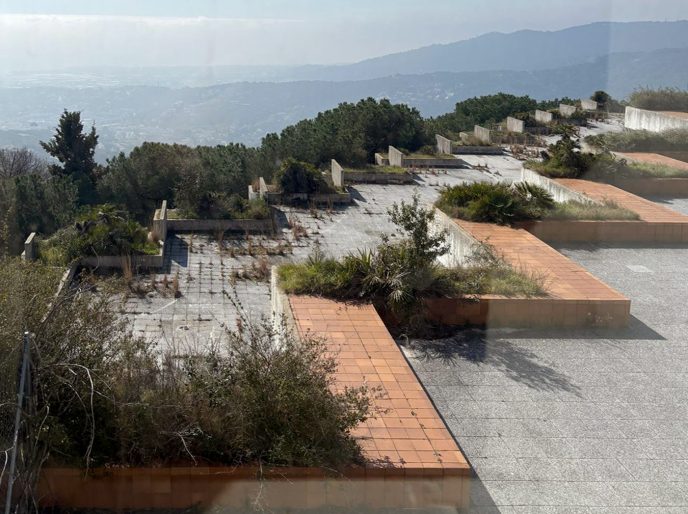
Last week, the Laboqueria Arquitectura team visited the Mútua Metal·lúrgica de Seguros Inpatient Recovery Center (1971–1980), located in Cabrils and designed by Antonio Bonet Castellana, currently known as Midat ​​Mútua, a visit that allowed them to directly approach an architecture that can be considered a reference in the construction of a modernity rooted in the place.

Son Ferriol Health Centre

Building with earth for healthy architecture

Construir con tierra son ferriol

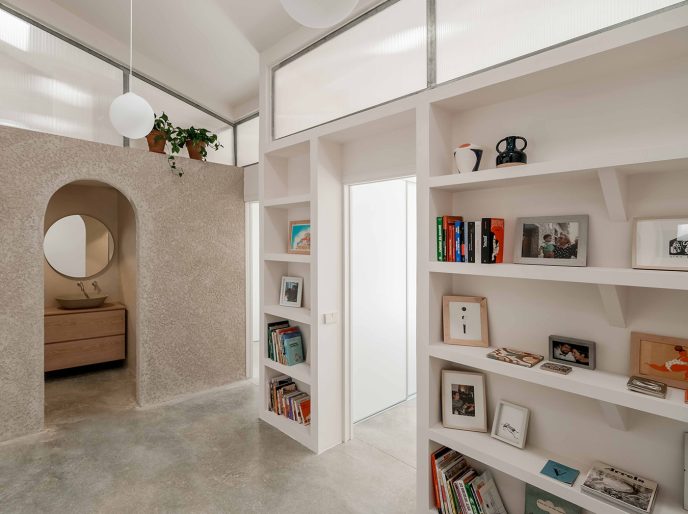
For decades we’ve been building as if concrete and plastic were the only way to guarantee hygiene. And along the way, we’ve ended up living and working inside buildings that don’t breathe.

At Laboqueria Arquitectura, we start from a different conviction: healthy architecture begins with what we touch. With the walls that surround us when we’re sick, waiting, or simply spending the day in a space we didn’t choose.

Construir con tierra son ferriol

Housing Sabadell

Collective housing with central courtyard

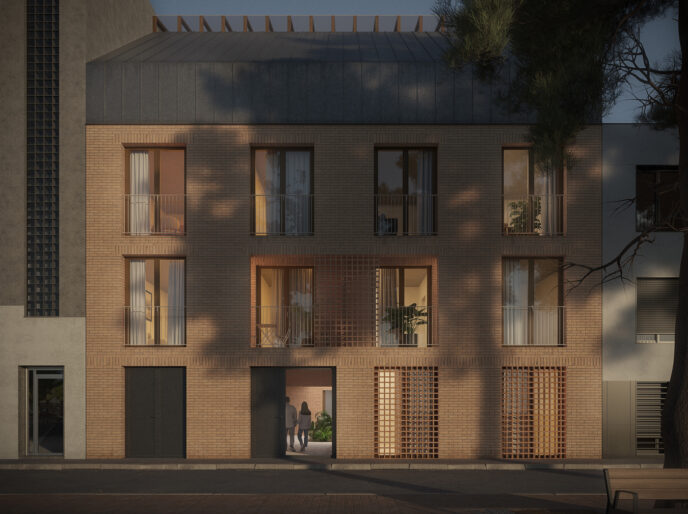
Habitatges a Sabadell és un projecte residencial que aposta per un model d’habitatge saludable, eficient i arrelat al context.

At Laboqueria Arquitectura we understand collective housing as an opportunity to rethink the way of living from criteria of health, efficiency and community. Habitatges Sabadell, located in Sabadell, was born with the desire to create a building rooted in its urban and climatic context, capable of offering environmental quality and well-being to its users.

Habitatges a Sabadell és un projecte residencial que aposta per un model d’habitatge saludable, eficient i arrelat al context.

Repoblem

Strategies to generate resilient rural communities

The debate about “emptied Spain” or rural Catalonia tends to veer towards nostalgia or wrong short-term solutions. The usual thinking is that rural depopulation is solved by attracting people, as if towns were empty containers waiting to be filled. After years of research with the Repoblem project, our conclusion is different: repopulating is not a real estate act, it is a process of social and architectural engineering.

Cooperative housing

How community participation has transformed cooperative housing

In the traditional real estate model, the future resident is a passive actor. Someone who buys a finished product, designed under criteria to maximize profitability and standardization. However, housing is much more than a financial asset. It is the stage where life develops. At Laboqueria Arquitectura we believe that we must change the focus to transform the figure of the “owner” into that of the “inhabitant”.

This transformation is only possible through cooperative housing. This model, based on collective property and the right of use, not only seeks to offer a roof, but also to create solid and resilient coexistence structures. The La Balma project, in the Poblenou neighborhood (Barcelona), is the living testimony of this vision.

Arquitectura y Diseño

Cooperative architecture as social infrastructure

Recently, the magazine Arquitectura y Diseño has published an interview with Ricard Grau, partner of Laboqueria Arquitectura, who invites us to reflect on a way of understanding architecture that goes much beyond form and aesthetics.

Based on the experience in cooperative housing projects in cession of use, the article focuses on the importance of thinking about buildings from everyday life, the diversity of uses, the cares and the community. A view that understands that every architectural decision is also a structural and social decision, capable of defining who has access to housing, how they live and under what conditions.

Healthy Materials

The definitive guide to building healthy spaces

guía definitiva para construir espacios sanos

At Laboqueria Arquitectura, our cross-cutting methodology teaches us that commitment to the environment must go hand in hand with human well-being. The problem we face is clear: according to the WHO, we spend almost 90% of our time indoors, and the air we breathe (at home and at work) is often up to five times more polluted than the air outside.

guía definitiva para construir espacios sanos

Accessible housing

Debate at COAC on teaching and professional practice in housing

On November 24, our partner Alfons Tornero, from Laboqueria Arquitectura, participated in the session “Learning. Teaching Architecture, the transdisciplinary team and professional placement”, organized by the Col·legi d’Arquitectes de Catalunya (COAC). The day was a space for inspiring exchange and debate, where key issues about academic training and professional practice in the field of housing were addressed.