Collective housing with central courtyard
At Laboqueria Arquitectura we understand collective housing as an opportunity to rethink the way of living from criteria of health, efficiency and community. Habitatges Sabadell, located in Sabadell, was born with the desire to create a building rooted in its urban and climatic context, capable of offering environmental quality and well-being to its users.
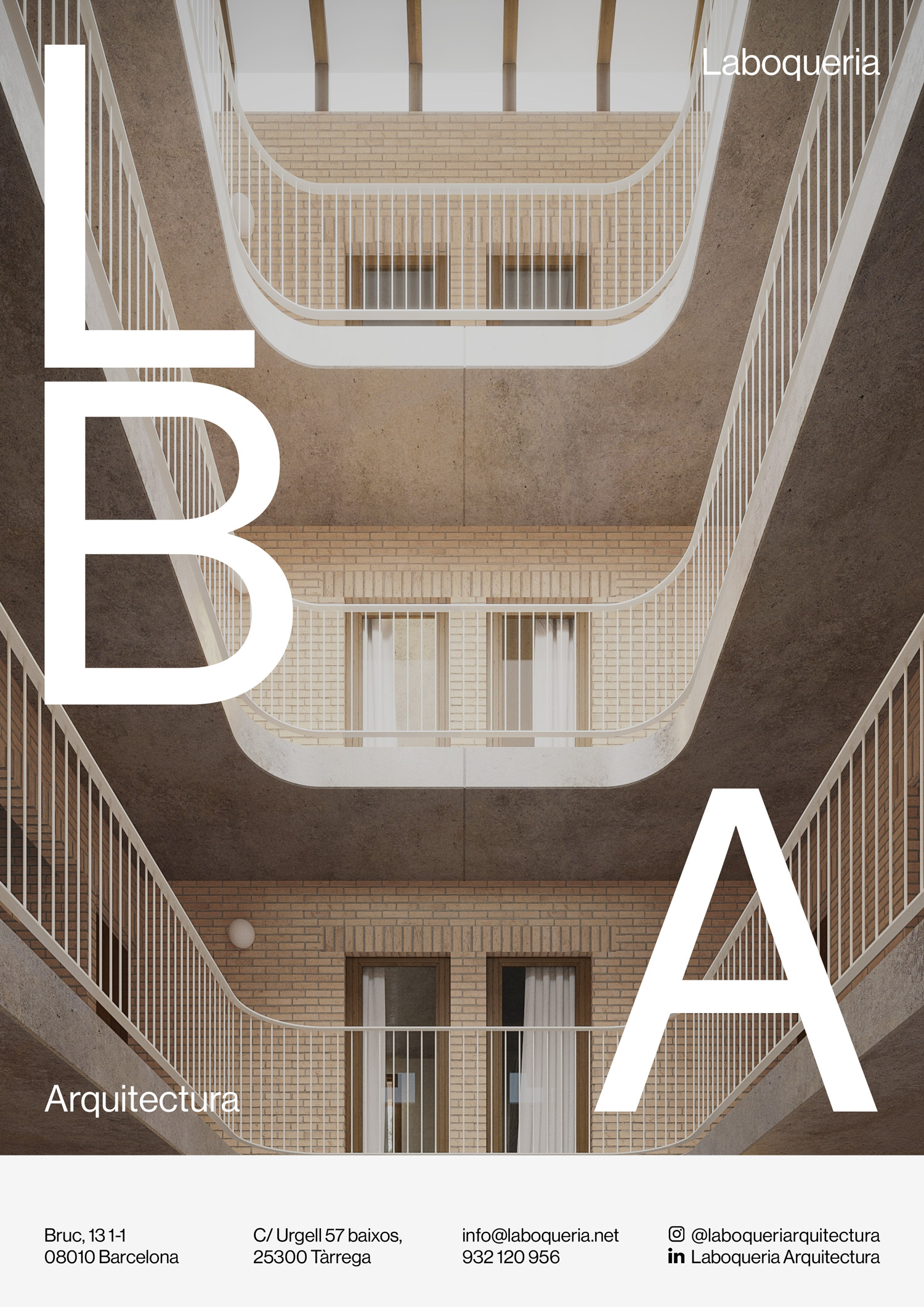
The building, with three floors, is organized around a central courtyard that acts as a structuring element of the project. This void backbones the distribution, guarantees the entry of natural light into all the homes and facilitates cross-ventilation, improving thermal comfort and indoor health. The courtyard is not only an environmental mechanism, but also a space for relationships that reinforces the community character of the whole.
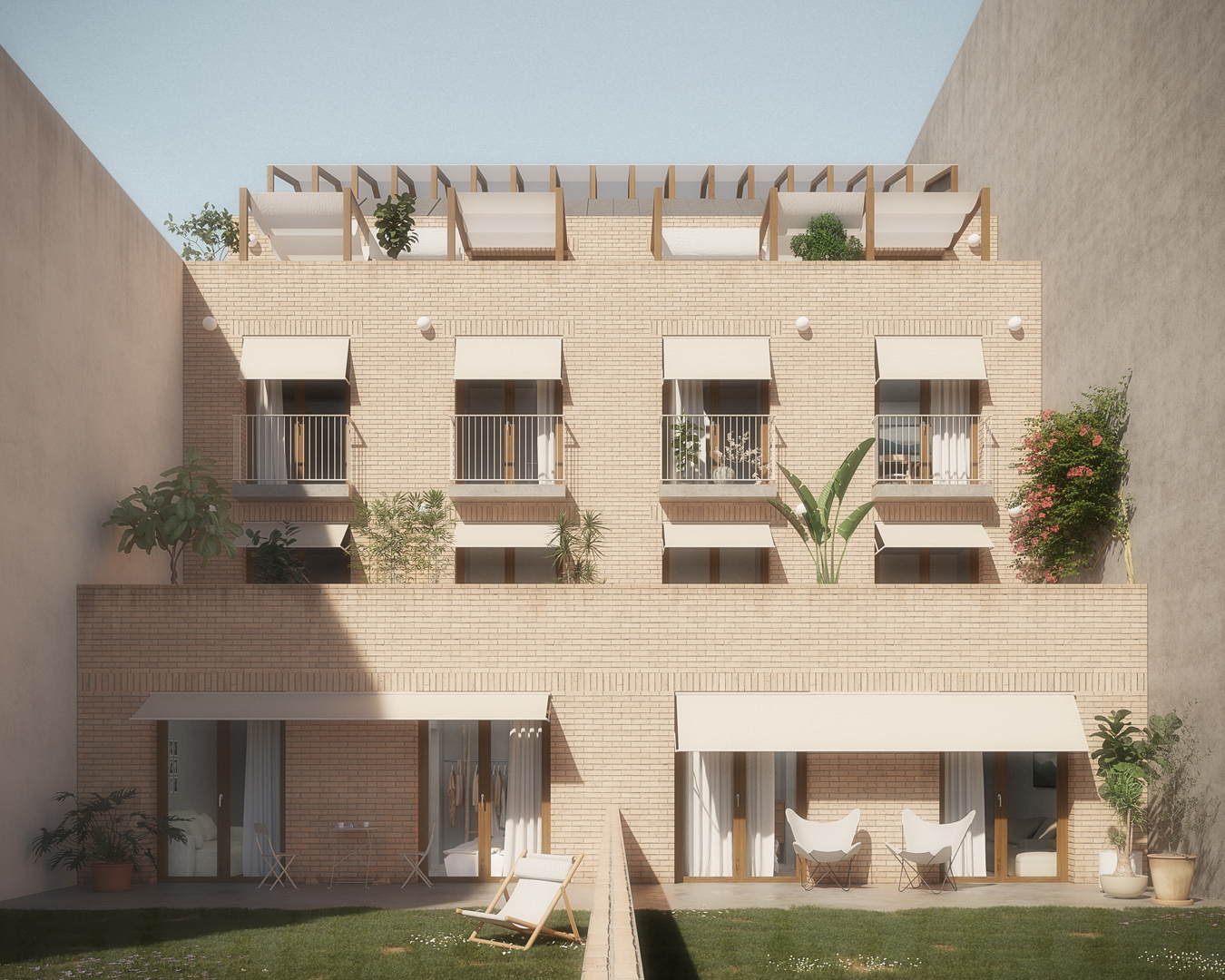
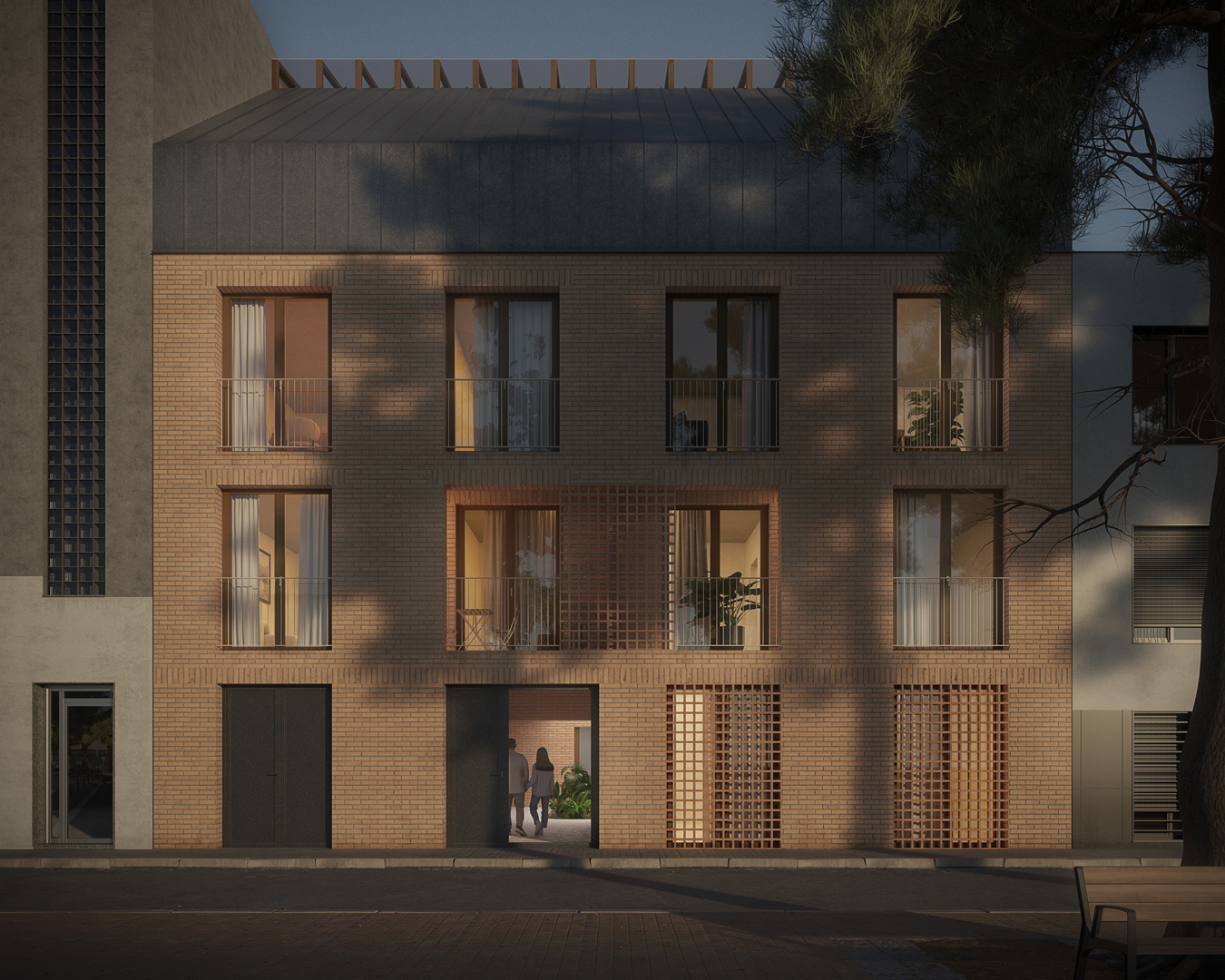
Each home establishes a direct relationship with the outside through balconies and terraces, visually expanding the interior spaces and generating transitions between the private and the collective realm. The architecture thus favors an open, flexible and connected living experience with the environment.
The project is developed under a bioclimatic design strategy that optimizes the orientation of the building and incorporates solar protection such as pergolas and overhangs. These elements regulate solar incidence throughout the year, reduce energy demand and contribute to creating efficient and comfortable homes without excessive use of active systems.
The materiality responds to sustainability and durability criteria. Healthy materials and simple and efficient construction solutions are used that minimize the environmental impact and guarantee low maintenance in the long term. The combination of passive systems with optimized construction allows a balance to be achieved between robustness, efficiency and spatial quality.
Housing Sabadell demonstrates that collective housing can be both efficient and close, contemporary and contextual. A project that places environmental comfort and the community dimension at the center of the proposal, understanding architecture as a tool to improve the quality of life and strengthen the bond with the place.