Laboqueria
Arquitectura

Rurality and care

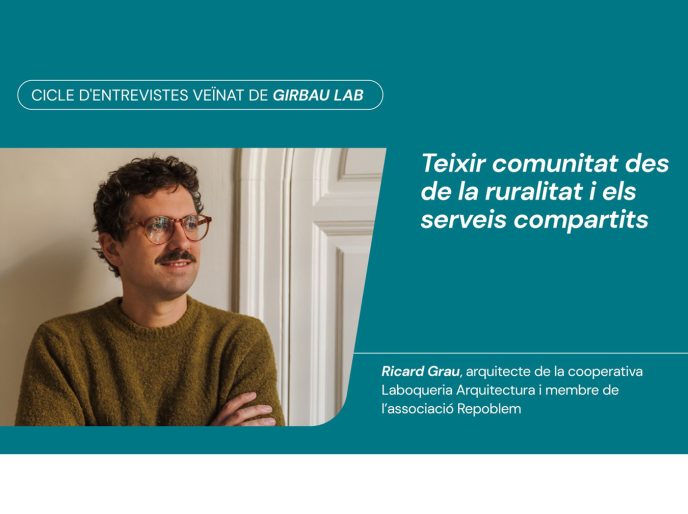
Interview with Ricard Grau at Veïnat de Girbau LAB

As part of Barcelona 2026 World Capital of Architecture, the Veïnat interview series, promoted by Girbau LAB in collaboration with Holon, continues to explore new ways of living through a contemporary perspective on shared laundry facilities, common spaces, and everyday coexistence.

One of the latest conversations in the series featured Ricard Grau, architect and partner at Laboqueria Arquitectura, as well as a member of the Repoblem association, an initiative focused on revitalizing micro-villages and promoting new rural life in Catalonia.

Wooden construction

Participation in the EcoHUB Wood Networking Club 2026

On April 16, Alfons Tornero, representing Laboqueria Arquitectura, participated in the Club Madera Networking 2026 held at EcoHUB, in Cabrera de Mar, a leading meeting dedicated to wood construction, innovation and sustainability in building.

House in Ametlla de Segarra

Rehabilitation of an old warehouse into a contemporary home

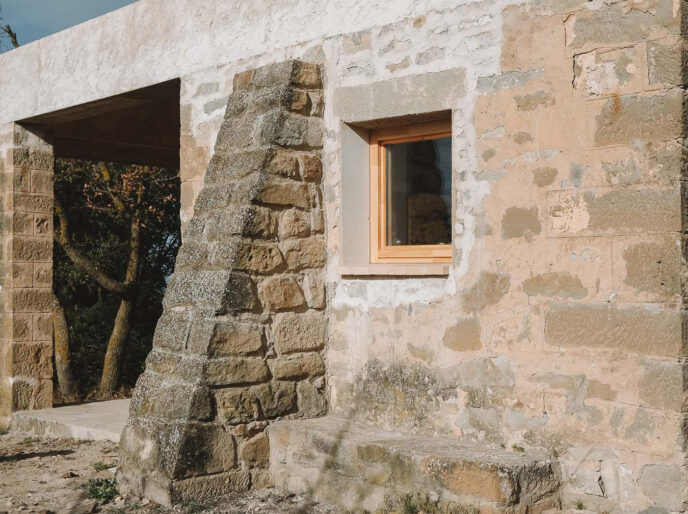
At Laboqueria Arquitectura, we understand rehabilitation as an opportunity to recover the memory of places and adapt them to new ways of living. This house in Ametlla de Segarra, located in a small rural village in La Segarra, is the result of the respectful transformation of an old warehouse into a contemporary home, maintaining the essence of traditional architecture and its relationship with the surrounding context.

Architecture Competition

Competition for the new Saint-Aubin school complex

We are pleased to announce that Laboqueria Arquitectura, together with Diego Carrión Lobo, has participated in the competition for the new school complex in Saint-Aubin, Switzerland.

The proposal envisions a new educational complex integrated into the rural landscape and the historical context of the village, with the aim of strengthening the relationship between architecture, public space, and community. The project incorporates new school buildings and the renovation of an existing farmhouse, creating a coherent complex capable of evolving over time and adapting to the future needs of the municipality.

How to design a residential building in the AMB

There’s a conversation we have almost every week in the studio. A developer arrives with a very clear mental sketch: how many floors, what kind of facade, the zoning regulations. And the first thing we do, before even starting any program, is go out and see the site together. Because in the Barcelona Metropolitan Area (AMB), the site speaks to you. And if you don’t listen to it at the beginning, it screams at you when you’ve already spent six months on a multi-family building project that doesn’t fit.

Multi-family housing in Sabadell

A new model of healthy architecture in Vallès

habitatges sabadell façana edifici plurifamiliar

Sabadell, as the driving force of the Vallès region, demands architecture that evolves in step with its inhabitants. The traditional apartment block model, often dark and disconnected from the outside world, is giving way to designs that prioritize well-being and efficiency. It is in this context that our most recent architectural project in Sabadell was born: a multi-family residential building that focuses on health, energy savings, and a sense of community.

habitatges sabadell façana edifici plurifamiliar

Celler Rabassaires

Wineries: heritage, landscape and production

At Laboqueria Arquitectura, we understand the winery as an opportunity to connect architecture, territory, and productive culture. Beyond being a technical space, the winery is conceived as a place where the winemaking process becomes visible and where heritage is transformed into experience.

Redó

Cradle to Cradle for materials recirculation

The construction industry has historically been one of the largest generators of waste on our planet. For decades, the model has been linear: extract, manufacture, build, and demolish. But what if we could break that cycle? At Laboqueria Arquitectura, we’ve decided to stop seeing “rubble” and start seeing resources.

Under this premise, REDÓ was born, a social and construction innovation program that focuses on the recirculation of materials following the Cradle to Cradle philosophy. REDÓ is not just an environmental strategy; it’s a management model that seeks to minimize the impact of our projects while generating a positive return for society and the region.

Territori de Vincles

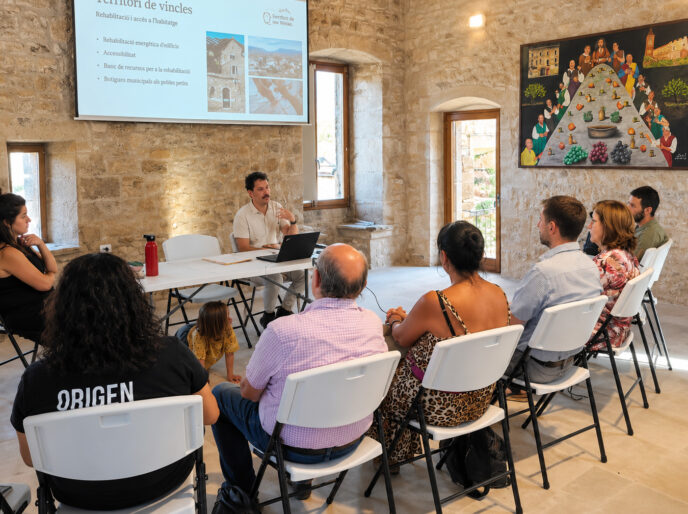
Rehabilitate to reverse rural depopulation

The municipality of Ciutadilla, in Urgell, has recently inaugurated eight official housing units in the former Civil Guard barracks. The intervention transforms a disused building into affordable rental housing, responding to a structural problem in the rural world: access to housing and the progressive loss of population.

This action is framed within a broader context of reflection on how to generate new opportunities for living in rural environments, based on the reuse of the existing built stock.

Mediterranean architecture

Constant learning from the built work

Last week, the Laboqueria Arquitectura team visited the Mútua Metal·lúrgica de Seguros Inpatient Recovery Center (1971–1980), located in Cabrils and designed by Antonio Bonet Castellana, currently known as Midat ​​Mútua, a visit that allowed them to directly approach an architecture that can be considered a reference in the construction of a modernity rooted in the place.