The definitive guide to building healthy spaces
At Laboqueria Arquitectura, our comprehensive methodology teaches us that environmental commitment must go hand in hand with human well-being. The problem we face is clear: according to the WHO, we spend almost 90% of our time indoors, and the air we breathe (at home and at work) is often up to five times more polluted than outdoor air. This invisible pollution comes from VOCs (volatile organic compounds) emitted by adhesives, paints, and more conventional building materials.
From our perspective, an integrated project should not only be energy-efficient or aesthetically pleasing, but also healthy. Our goal in this guide is not to add to the list of the most common “eco” materials, but to define the foundations of truly healthy construction based on our experience. A smart choice of materials is the most effective strategy for building spaces that care for people and the environment: cross-laminated timber, rammed earth, low-impact ceramics…
This is a practical roadmap that should be considered in any project, whether a renovation or new construction, based on indoor air quality, reducing the ecological footprint, and construction management that prioritizes health.

Hidden risks and the definition of a healthy material
The trend toward obtaining “green” certifications leads many professionals to ignore the residual toxicity that remains inside buildings. The real enemies are VOCs, and especially formaldehyde.
These are chemicals that are continuously released throughout a building’s lifespan, contributing to health problems. The vast majority of materials used in conventional construction are active sources of this pollution.
Beyond the label: What is a healthy material?
A material is not healthy simply because it is of natural origin. In our experience, a healthy building material must meet three conditions that we have integrated into our work methodology:
- Low or Zero VOC Emissions: a fundamental criterion in which we prioritize materials that are inherently inert, treated with natural sealants, or using techniques that prevent the release of toxins.
- Closed Life Cycles (Recirculation): materials that leave a low carbon footprint in their production, are locally sourced, and are easily reusable, recyclable, or biodegradable.
- Bioclimatic Capacity: materials that actively contribute to regulating indoor conditions, reducing the need for aggressive mechanical systems and improving passive comfort.
These three criteria are non-negotiable; they are integral to our technical and ethical philosophy.
Real-life examples: 3 projects using healthy materials
Material selection is a technical decision tailored to the location, climate, and functional objectives of each project. Our methodology allows us to integrate low-impact materials into complex projects, whether urban or rural.
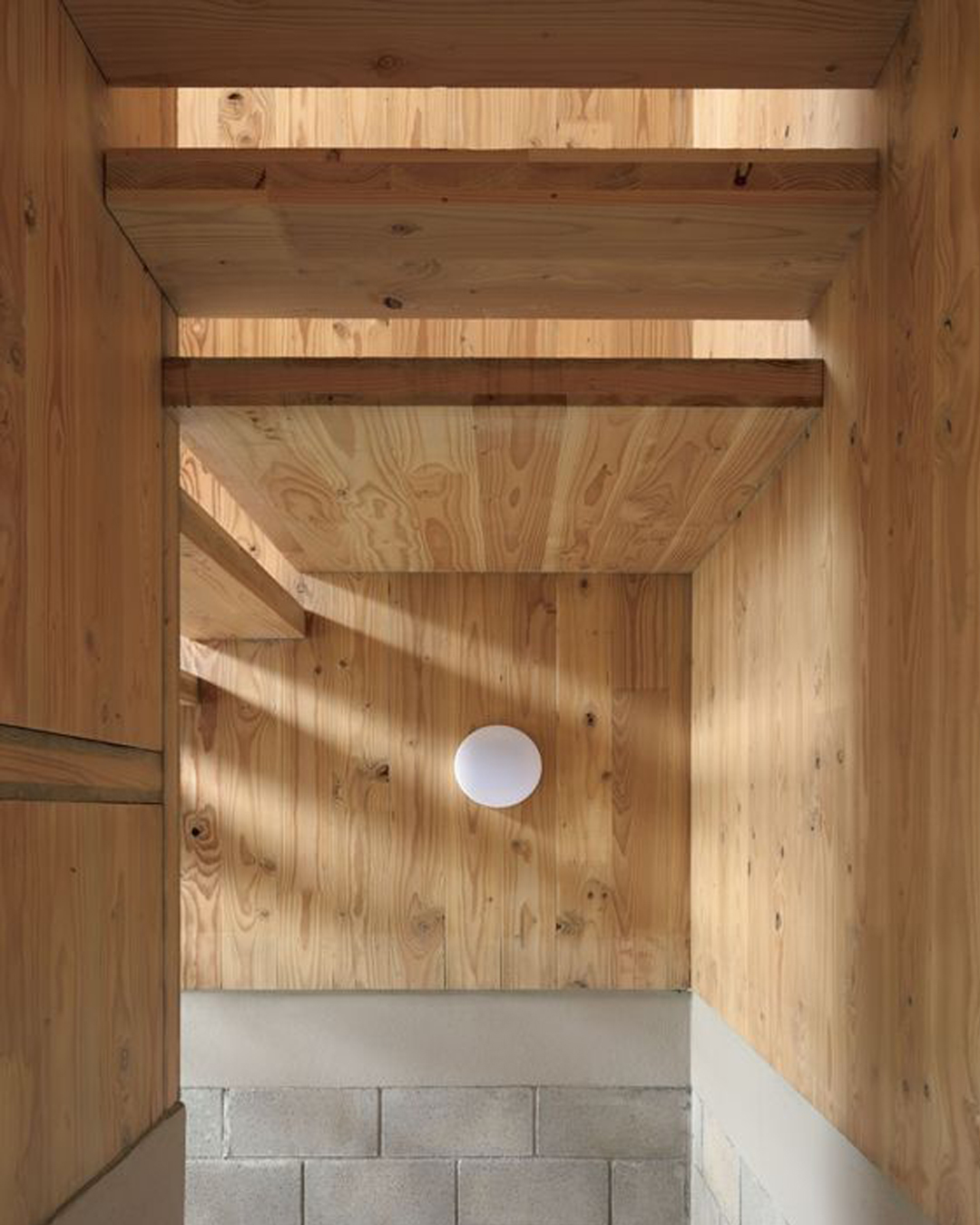
CLT Wood Structure: La Balma
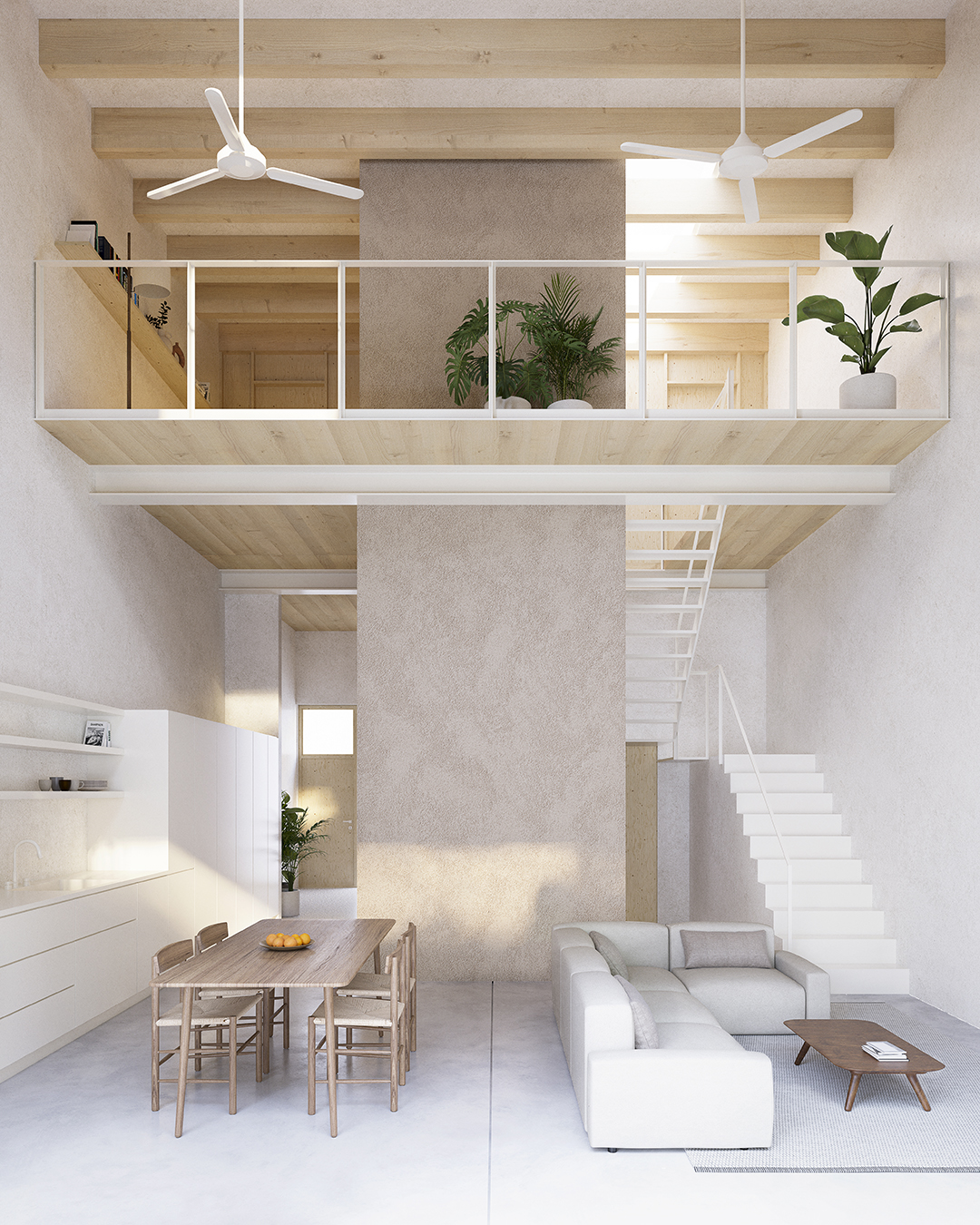
Cross-laminated timber (CLT) is the ideal choice when speed of construction and a drastic reduction in carbon footprint are priorities. It is a material that, by its very nature, provides warmth and regulates indoor humidity. In the La Balma Cooperative Housing project, we used CLT for the entire structure, significantly accelerating assembly. Furthermore, the structure itself became part of the interior finish, eliminating the use of other potentially toxic materials.
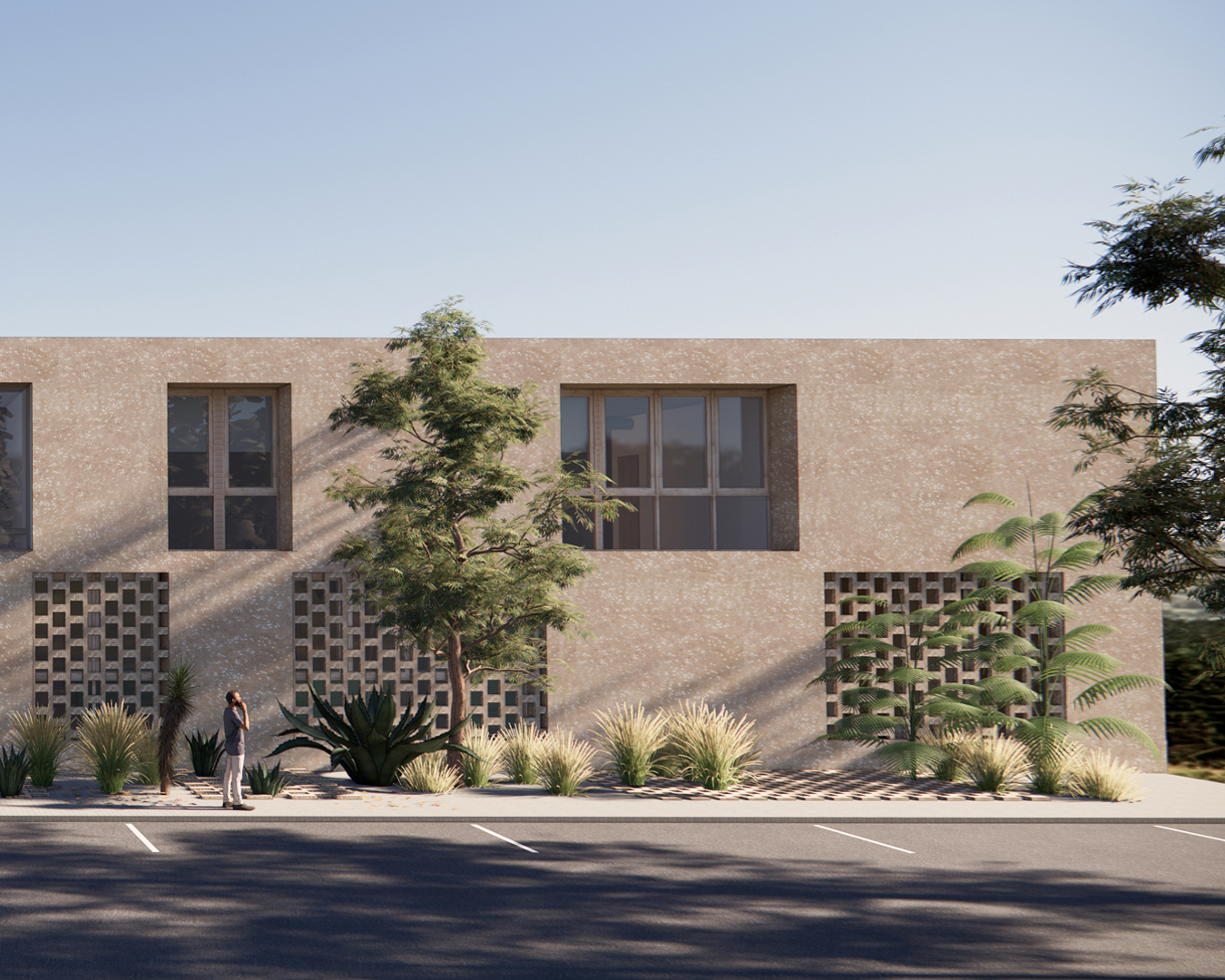
Rammed Earth Blocks: Son Ferriol
Earth is one of the oldest, most economical, and readily available building materials, with a near-zero carbon footprint. Its use in interiors is an excellent example of healthy architecture. At the Son Ferriol Health Center, we strategically used rammed earth block lattices. The earth is processed without firing, avoiding VOC emissions and preserving its natural properties.
Thermoclay Blocks: House 5102
In some cases, projects require the durability and thermal inertia of ceramics; the key lies in the selection. We wanted to opt for solutions that optimize production. In House 5102, the choice of thermoclay blocks allowed us to take advantage of the technical benefits of ceramics: high thermal inertia and resistance.
This diversity across three different projects demonstrates that healthy architecture is a way of managing construction projects that can be adapted to any scale and need.
Frequently asked questions about healthy building materials
What exactly are VOCs and why should I be concerned about them?
Volatile Organic Compounds (VOCs) are gases emitted by solids or liquids present in many building materials and finishes (paints, adhesives, foams). They are a concern because their high concentration indoors affects indoor air quality (IAQ), causing irritations, allergies, and long-term health risks.
Is building with natural materials like earth or CLT more expensive than conventional construction?
The initial cost of healthy materials may be comparable or slightly higher, but the investment pays for itself quickly. Reduced energy consumption thanks to bioclimatic properties and long-term maintenance savings result in a higher ROI.
Where can I find sources of healthy and reliable materials?
The key is to work with an architectural team experienced in cross-functional methodologies. Cooperatives like Laboqueria Arquitectura maintain a network of local, certified suppliers that guarantee traceability, a low environmental footprint, and zero VOC emissions for the selected wood, earth, or ceramic materials.
What is thermal inertia, and how do these materials contribute to it?
Thermal inertia is a material’s ability to store heat and release it slowly. Massive materials like clay blocks or rammed earth increase a building’s thermal inertia, which smooths out temperature fluctuations and passively maintains interior comfort.