Wineries: heritage, landscape and production
At Laboqueria Arquitectura, we understand the winery as an opportunity to connect architecture, territory, and productive culture. Beyond being a technical space, the winery is conceived as a place where the winemaking process becomes visible and where heritage is transformed into experience.
Our winery projects address the relationship between memory and contemporaneity through the restoration or reinterpretation of existing structures, organizing production spaces with clarity and efficiency, and fostering an understanding of the process through transparency. At the same time, they incorporate bioclimatic strategies and durable materials that guarantee comfort, efficiency, and coherence with the context, consolidating the winery as a hybrid space encompassing production, experience, and landscape.
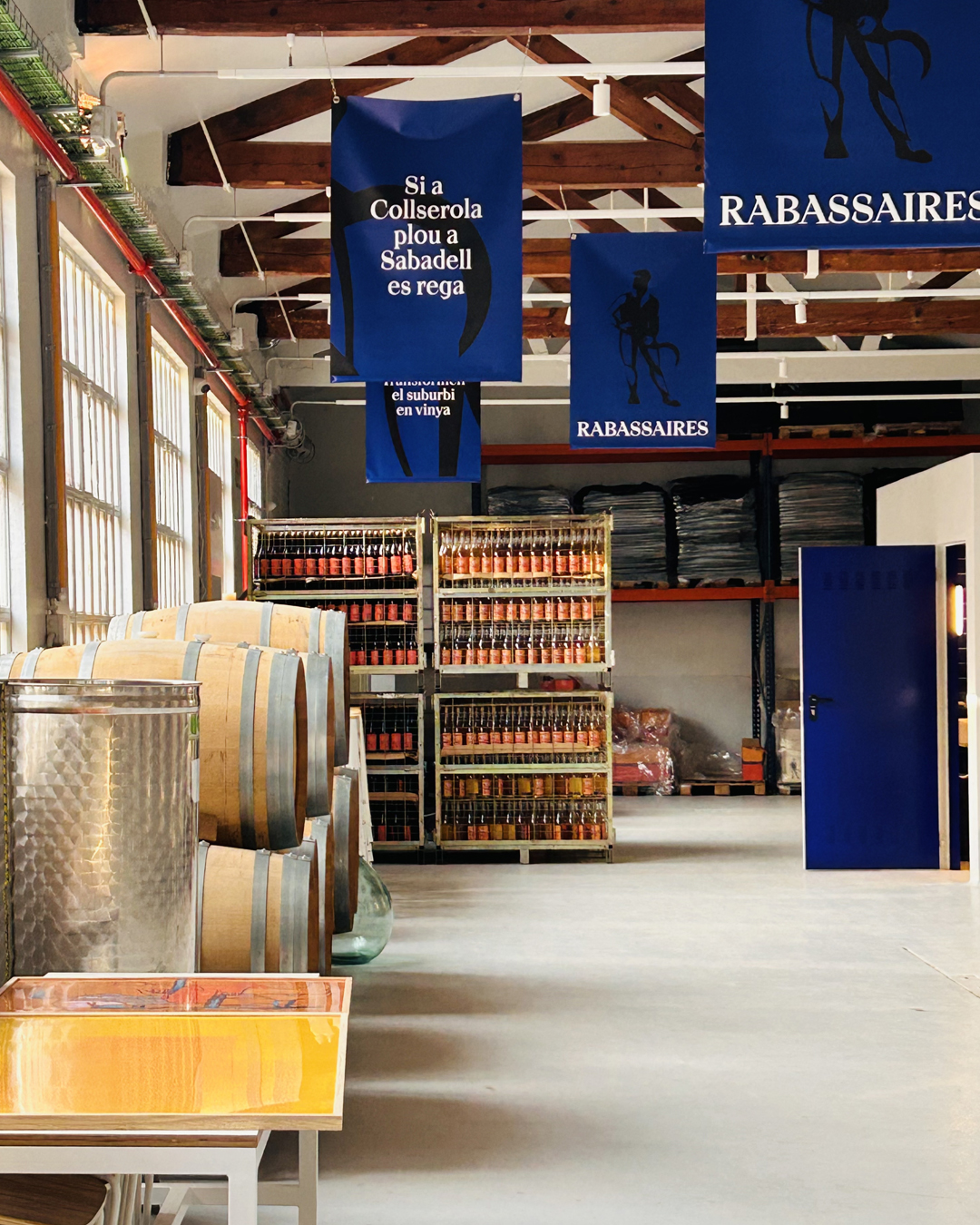
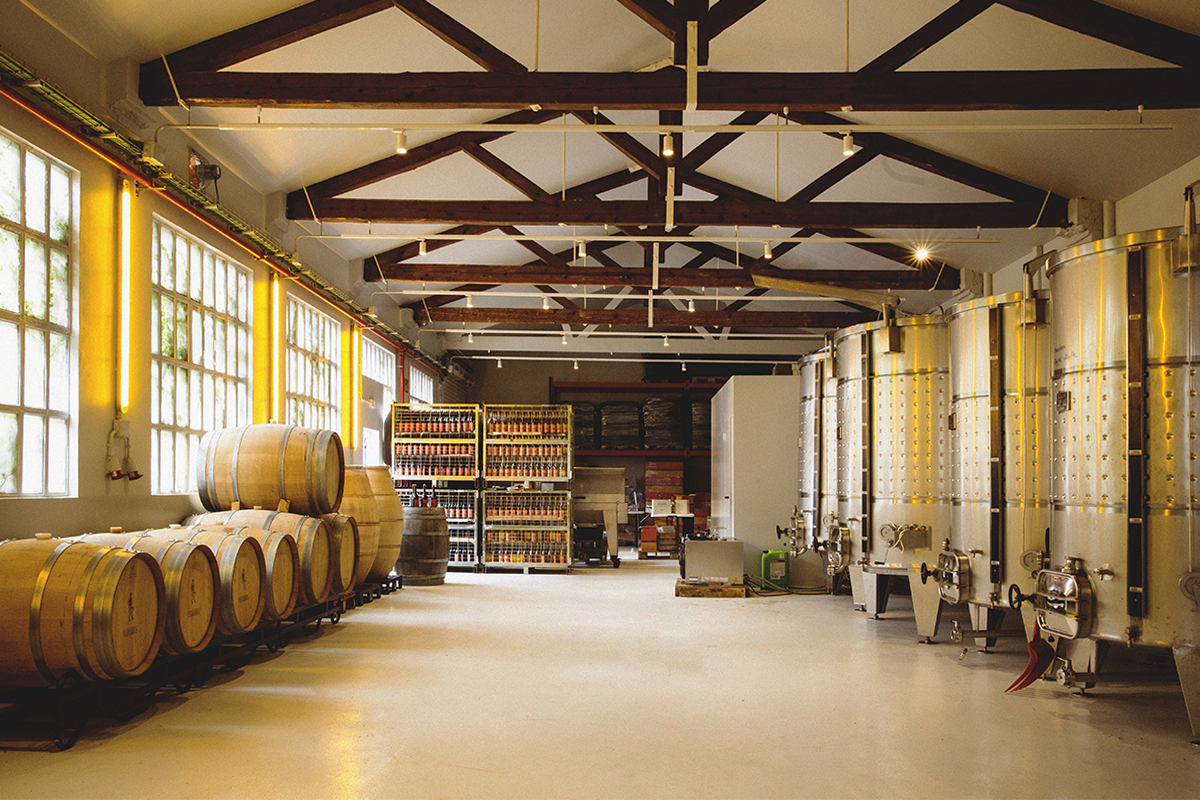
In this context, Celler Rabassaires was born from the restoration of a former industrial building in the heart of Sabadell’s production district, transformed into a new winery. The project is based on respect for the essence of the existing space, highlighting its original solid brick structure and wooden roof.
The intervention does not seek to erase the past, but rather to make it visible. The industrial heritage is preserved and reinterpreted from a contemporary perspective linked to wine culture, where the existing structure becomes an active part of the new architectural experience.
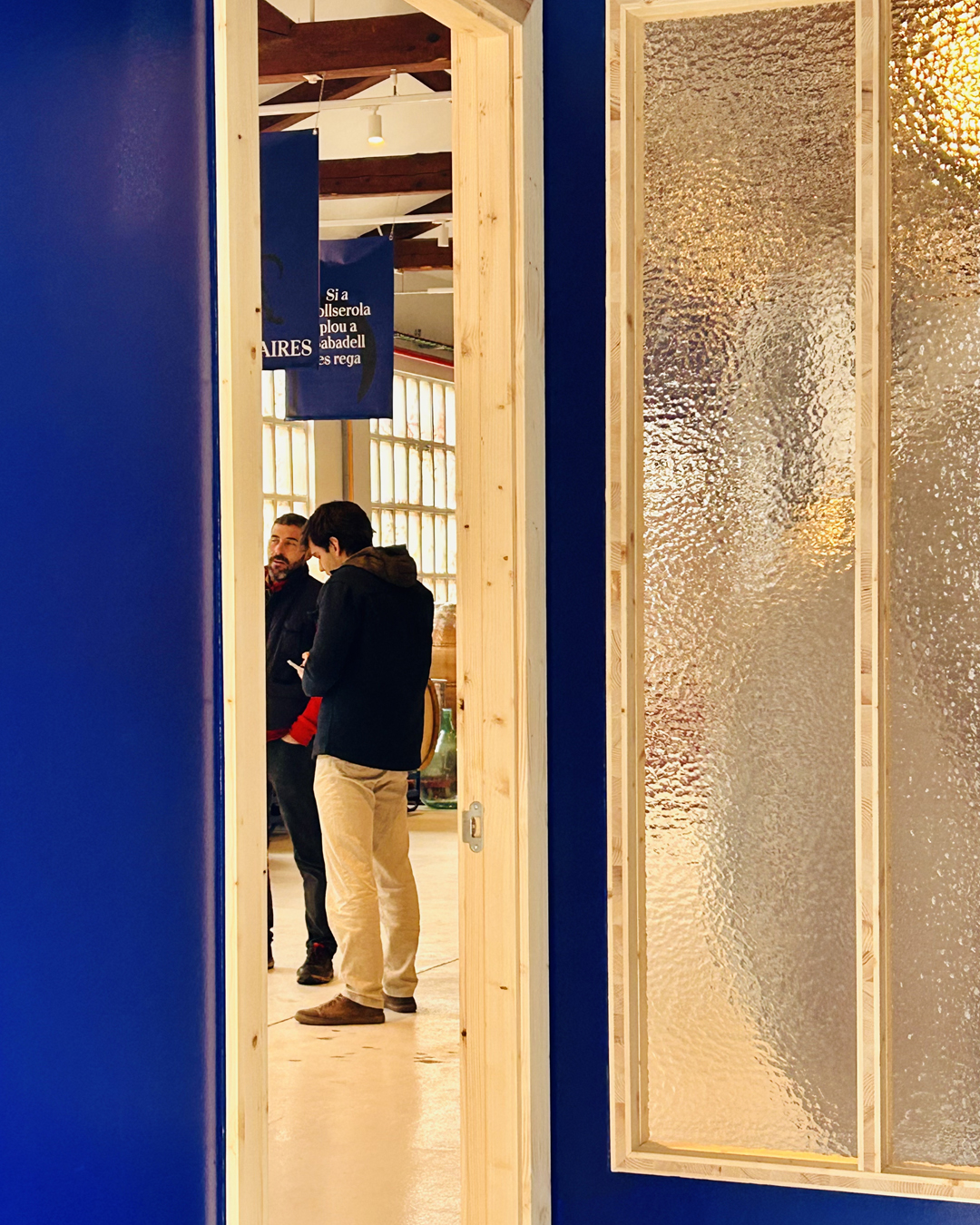
The production and storage area is conceived as a functional and efficient space where the winemaking process takes center stage. Barrels, tanks, and shelving are organized with industrial logic, maintaining spatial clarity and the structural integrity of the building.
Transparency is a key element of the project. Visitors can explore the space, understand the production process, and become part of it, establishing a direct connection between architecture, production, and experience.
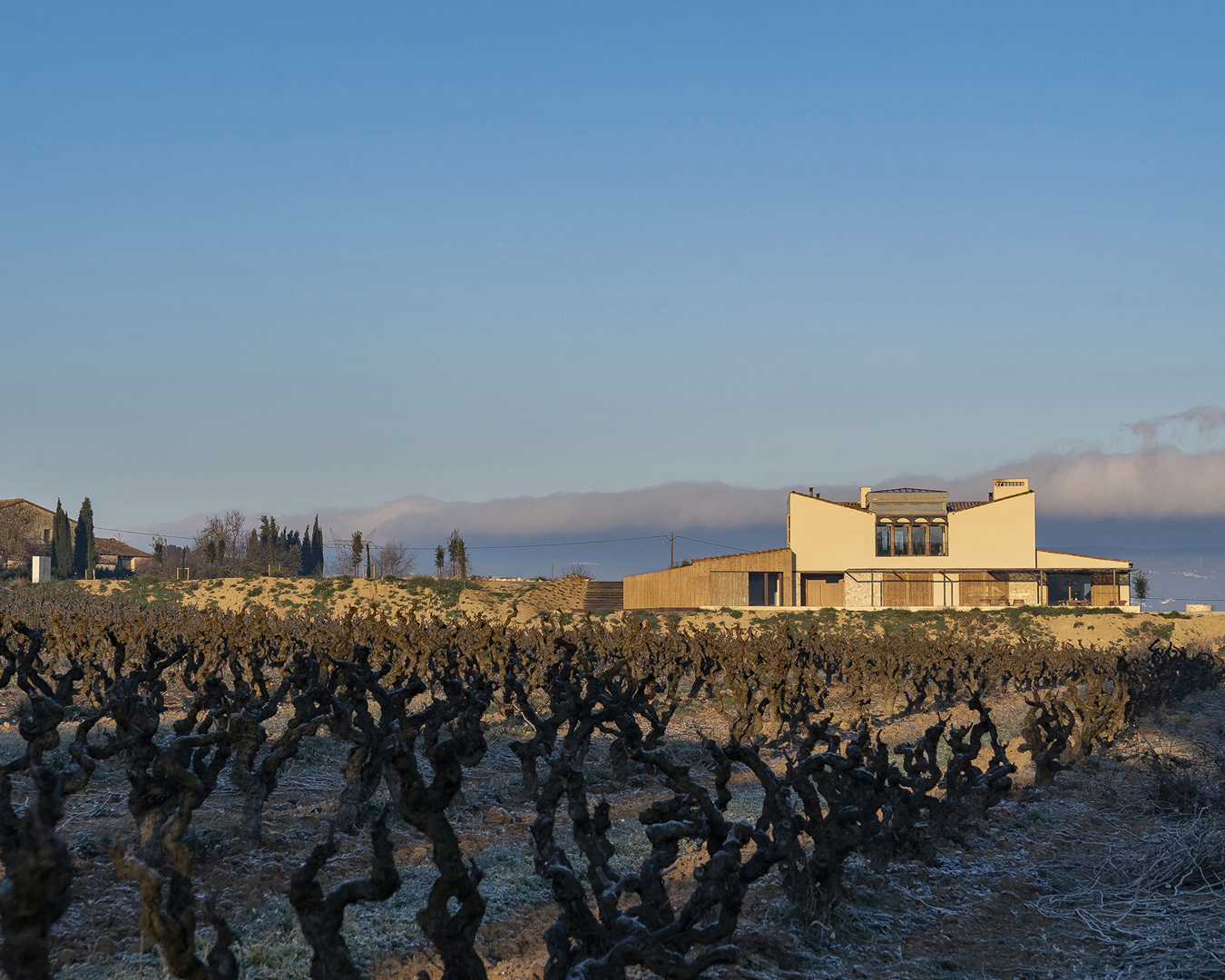
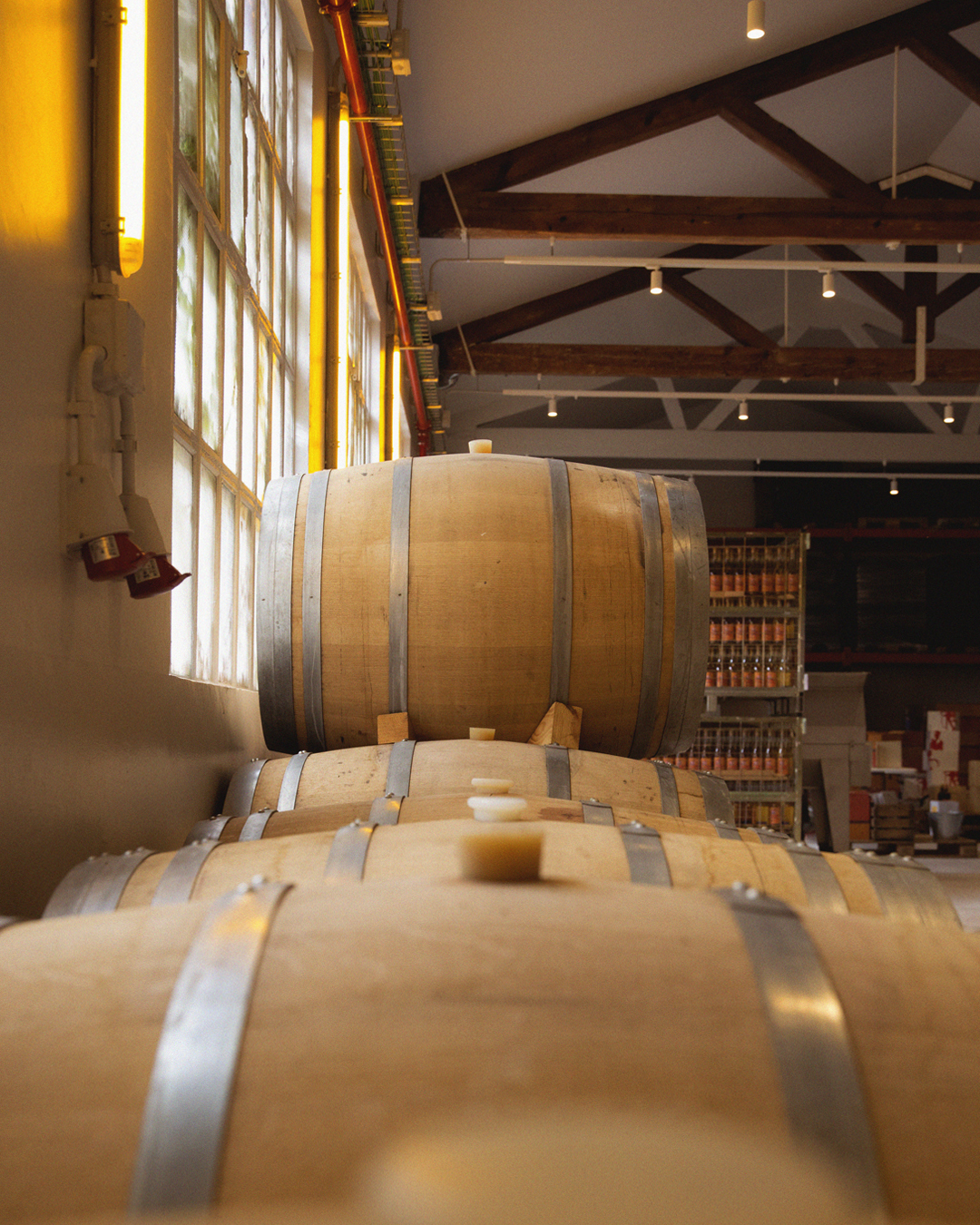
The project thus proposes an intervention that balances heritage and contemporary design, where architecture acts as a mediator between the memory of the place and its new use, consolidating an open, educational, and coherent productive space that reflects its identity.
This approach is part of a broader line of work focused on wine architecture. An example of this is the Celler Raventós Basagoiti project, where architecture, the natural environment, and production are integrated into a unified proposal.
The wineries thus become hybrid spaces, capable of combining production, heritage, and experience, where architecture reinforces the identity of the place and the wine culture.