How community participation has transformed cooperative housing
In the traditional real estate model, the future resident is a passive actor. Someone who buys a finished product, designed under criteria to maximize profitability and standardization. However, housing is much more than a financial asset. It is the stage where life develops. At Laboqueria Arquitectura we believe that we must change the focus to transform the figure of the “owner” into that of the “inhabitant”.
This transformation is only possible through cooperative housing. This model, based on collective property and the right of use, not only seeks to offer a roof, but also to create solid and resilient coexistence structures. The La Balma project, in the Poblenou neighborhood (Barcelona), is the living testimony of this vision.
La Balma was not born from a static plan, but from an intense and enriching process of community participation. Together with the Sostre Cívic housing cooperative and the Lacol architecture studio, we accompany a group of people with the common desire to live differently. The challenge was not only technical (how to fit 20 homes on a public lot), it was a challenge of methodology: how to integrate the expectations, fears and dreams of a diverse community into a tangible architectural reality?
The result is a building that not only “looks” different, but “functions” differently. In this article we explore how participation stopped being an administrative requirement and became the most powerful design tool we have to build an integrative architecture.
The power of the participatory process
Traditionally, architecture has been understood as the individual practice of a professional who decides how others should live. In cooperative housing, this paradigm is reversed. Under our own methodology, the architect stops being the sole author and becomes a technical facilitator.
In the case of La Balma, community participation was the backbone of the project. Accompanying a diverse group requires a transversal methodology that knows how to balance three fundamental axes:
- Active listening and diagnosis: Before drawing the first line, it is vital to understand who will inhabit the building. At La Balma, we work together with Sostre Cívic to identify the real needs of the group. How many coexistence units? What type of common spaces are a priority? How do you imagine life in community?
- Technical co-design: Participation has physical, regulatory and budgetary limits. Our job is to translate the community’s desires into viable architectural solutions. It’s not about making wishes, but about making informed decisions. We held workshops where future inhabitants could visualize the volumetry, accesses and distribution of uses, feeling like owners of the process from the first day.
- Consensus management: In a group of 20 coexistence units, consensus does not arise spontaneously; is built. Through mediation dynamics and participatory architecture, we achieved that the architectural project was a faithful reflection of the collective identity of the group.
This process guarantees something that the traditional market ignores: co-responsibility. When an inhabitant participates in the design of their home, they develop a sense of belonging and care towards the building that is the basis of long-term community coexistence.
La Balma: community that becomes architecture
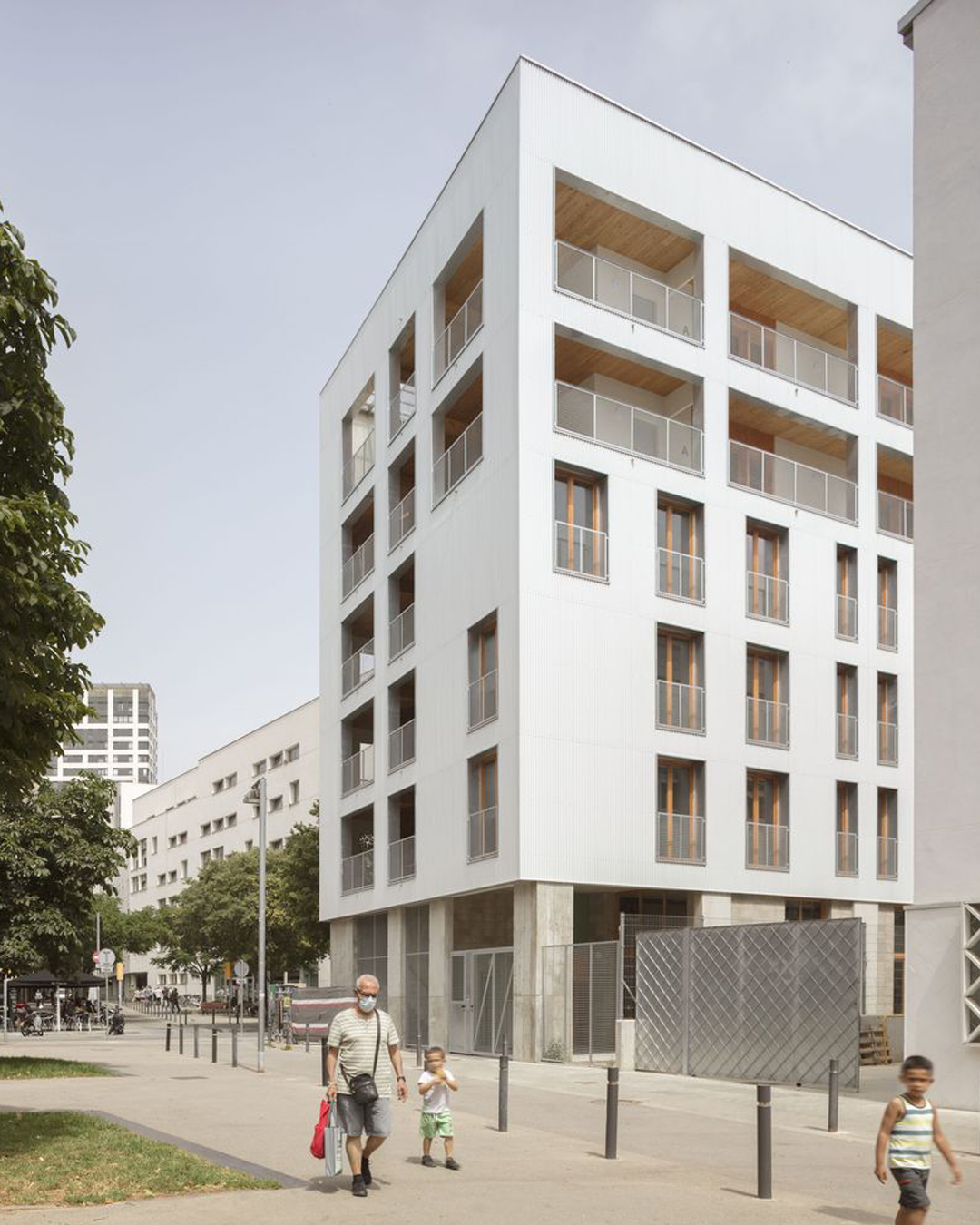
The architecture of La Balma is not capricious; It is a direct response to the group’s values. Thanks to the co-design methodology, the building breaks with the conventional hierarchy of housing to prioritize shared living and efficiency.
This project is articulated under three pillars that define the success of cooperative housing:
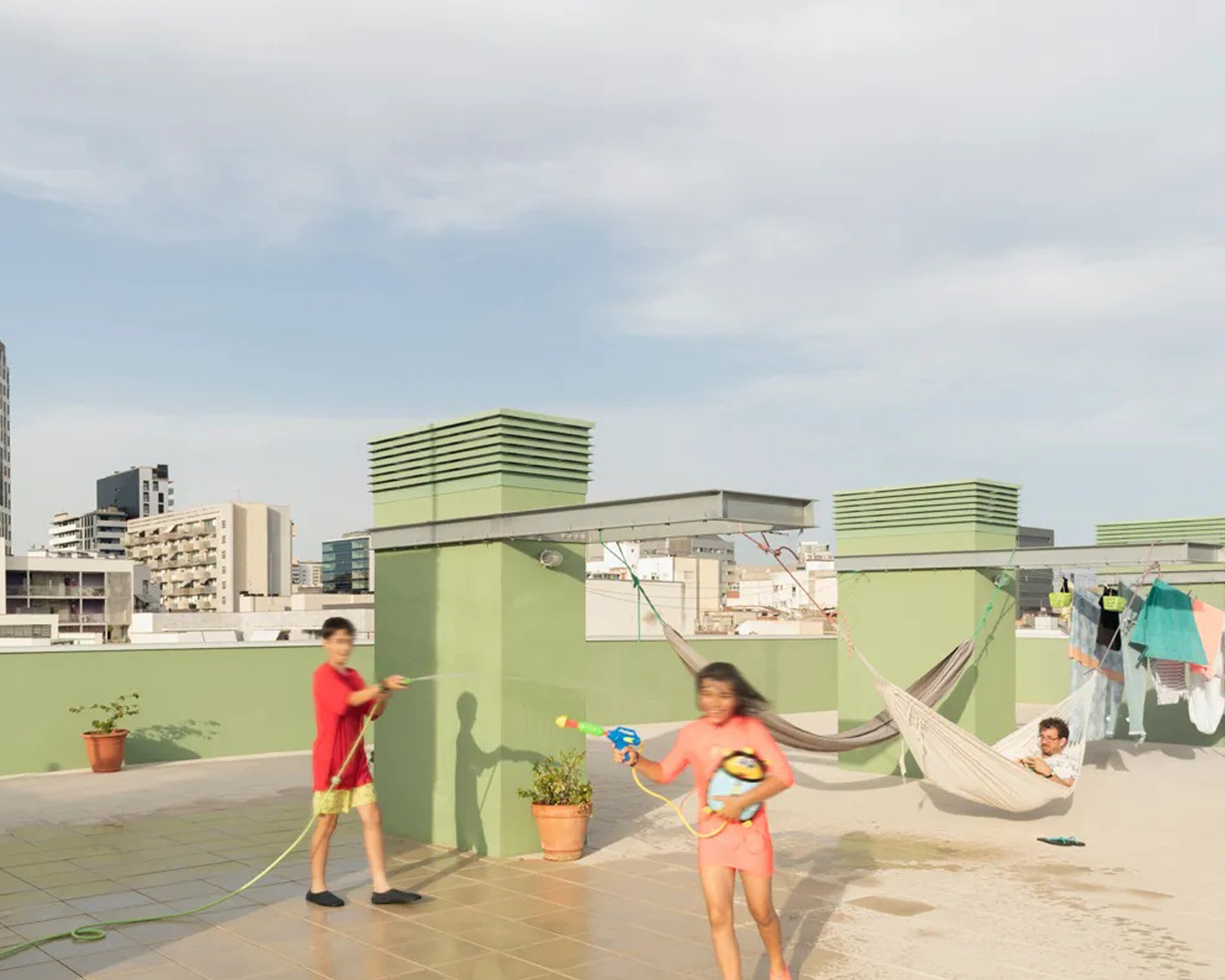
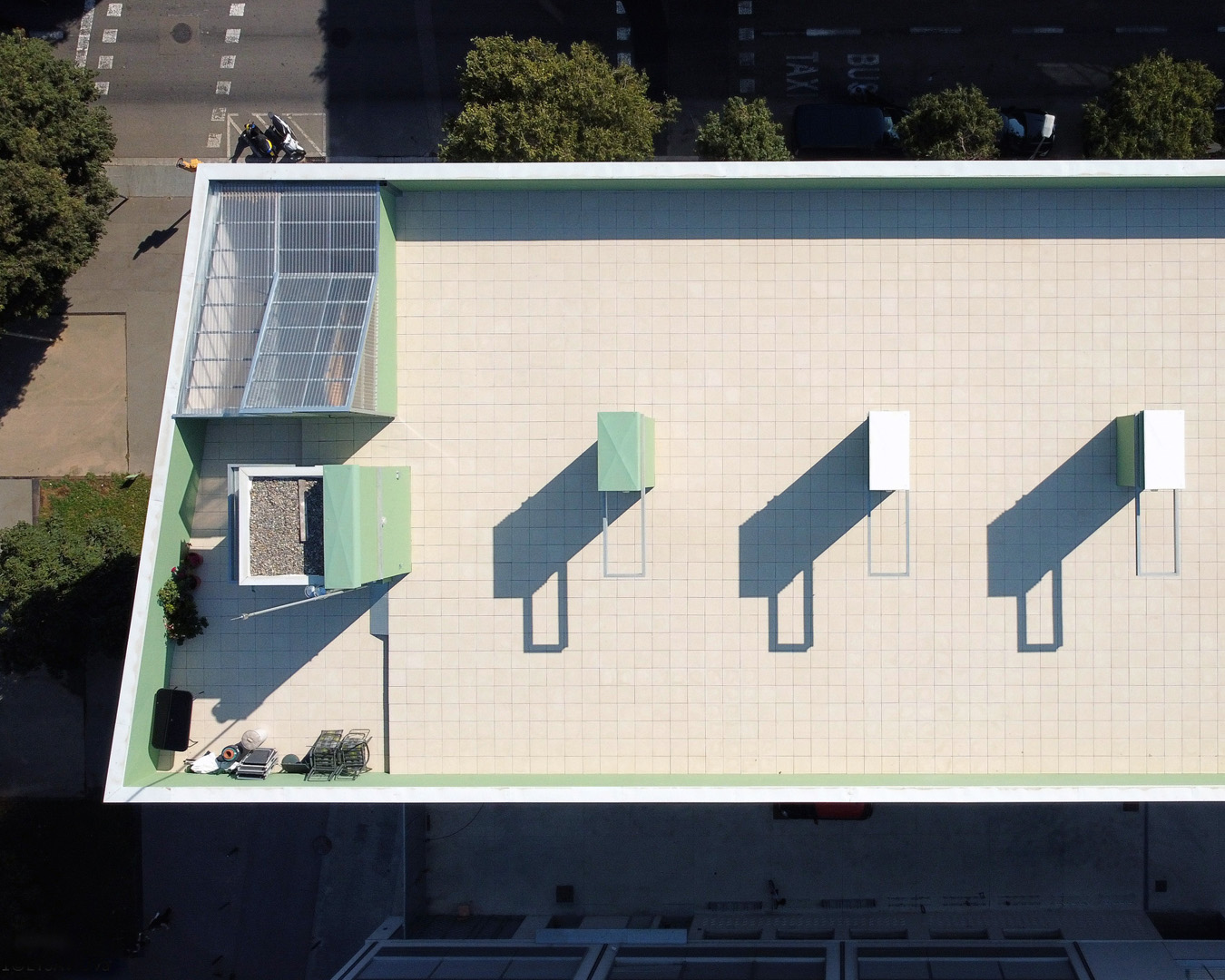
- The redistribution of space from I to We: In a traditional building, common space is often limited to a landing and an elevator. In La Balma, community participation dictated a clear priority: maximizing spaces for relationships. The result, strategic common areas were designed such as the community kitchen, laundry space, multipurpose rooms and a shared roof terrace. These areas are extensions of the home itself that allow the size of private units to be reduced to gain quality of collective life.
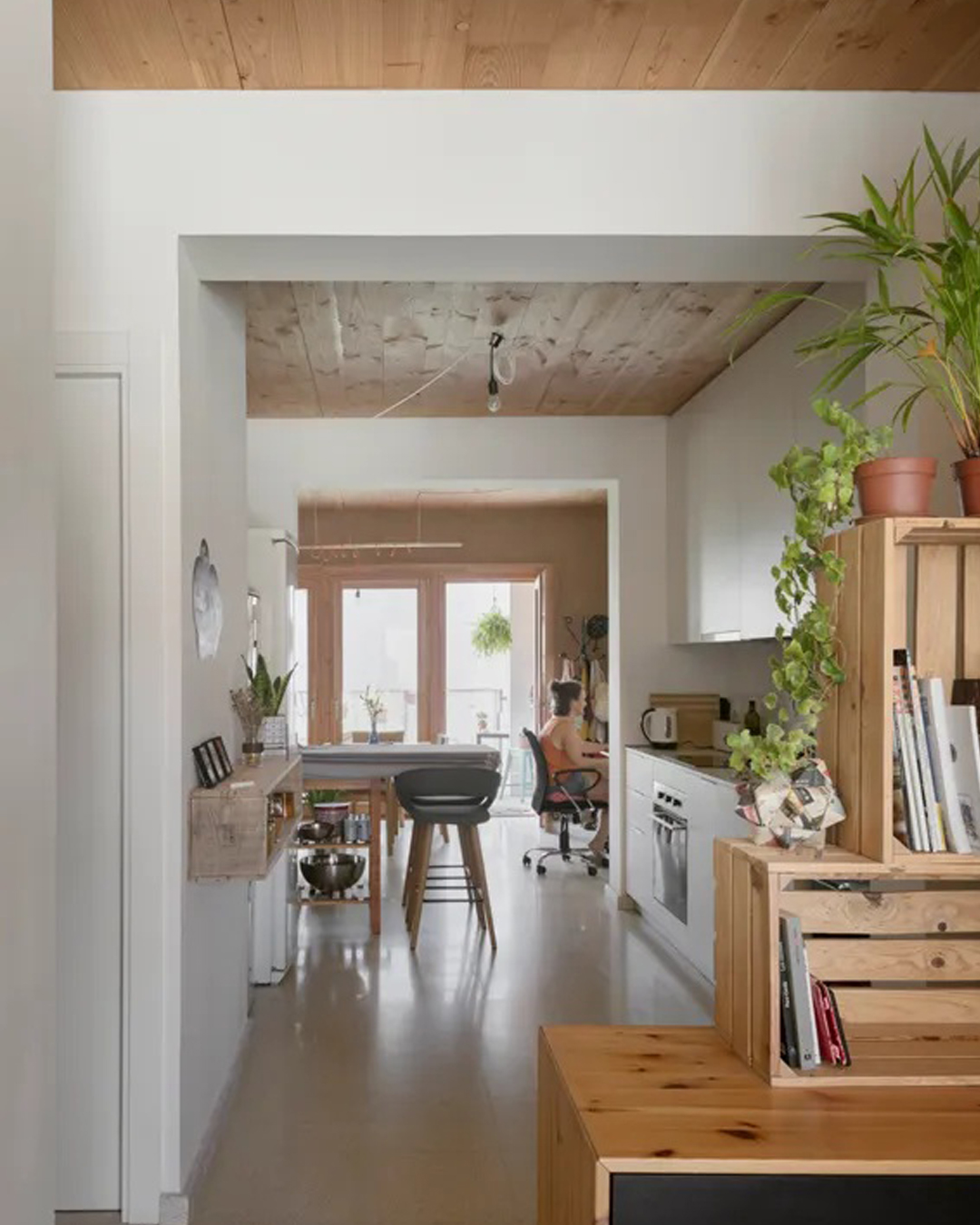
- Sustainability and materiality: The choice of cross-laminated timber (CLT) was not only a technical decision; It was a response to the group’s commitment to the climate crisis. The use of an exposed wood structure not only drastically reduces the carbon footprint of the building, but also provides hygrothermal and acoustic well-being that reinforces the health of the inhabitant. An architecture based on natural materials is an architecture that breathes, just like the community that inhabits it.
- Flexibility and the transfer of use model: Cooperative housing under transfer of use requires an architecture that adapts to the passage of time. Families grow or change, and the building must be able to respond. To this end, at La Balma, the design is conceived as adaptable and the housing typologies allow a certain flexibility. The transfer of use model guarantees that the property always belongs to the cooperative, avoiding speculation and ensuring that the building is a stable resource for future generations of inhabitants.
Architecture, therefore, acts as a facilitator: it does not impose a way of living, but rather offers the necessary support for the community to develop with autonomy and mutual support.
The impact on the neighborhood and the management of the process
Cooperative housing is in close relationship with its environment. In the case of La Balma, its location in Poblenou is strategic. Being a public-cooperative collaboration project (on municipal land), the building assumes the responsibility of improving its environment. The ground floor is conceived as a space open to the neighborhood, breaking with the impermeability of conventional private developments.
However, we are often asked: Is it feasible to manage so much participation without the project stopping?
Our answer is clear: complexity is not an obstacle, it is a guarantee of social success. In fact, at Laboqueria Arquitectura, as a cooperative of architects that we are, we work with a transversal methodology that allows us to:
- Times are optimized: By integrating social consulting with technical advice from the beginning, we avoid costly rectifications in the construction phase.
- Governance is clear: We provide decision-making tools that allow the group to move forward with technical, legal and economic security.
Community participation does not lengthen the process; makes it more robust. A group that has decided together what its wooden structure or its water use system will be like is a group prepared to manage its future coexistence successfully.
Thus, La Balma is much more than a wooden building in Poblenou; It is proof that another way of doing architecture is possible. At Laboqueria Arquitectura, our mission is to accompany these community participation processes by providing technical rigor, social sensitivity and a transversal vision of the territory.
Frequently asked questions about citizen participation
What exactly does the “assignment of use” model mean?
It is a model where the property is always owned by the cooperative and the land is publicly owned, and the members have the right to indefinite use of the home. This eliminates speculation, since housing cannot be sold on the free market, guaranteeing stable and social prices.
Can I participate in the design of my home if I do not have technical knowledge?
Absolutely. Our job as facilitating architects is to translate your needs and desires into technical solutions. In La Balma, the group actively participated through guided co-design workshops, where no previous experience was required, only the desire to live collectively.
What advantages does the CLT wooden structure have in this type of projects?
In addition to being a healthy and sustainable material, CLT allows for faster and cleaner construction. In La Balma, this was key to reducing the inconvenience derived from construction in the neighborhood and ensuring an energy efficiency standard that reduces family spending.