Building with earth for healthy architecture
For decades we’ve been building as if concrete and plastic were the only way to guarantee hygiene. And along the way, we’ve ended up living and working inside buildings that don’t breathe.
At Laboqueria Arquitectura start from a different conviction: healthy architecture begins with what we touch. With the walls that surround us when we’re sick, waiting, or simply spending the day in a space we didn’t choose.
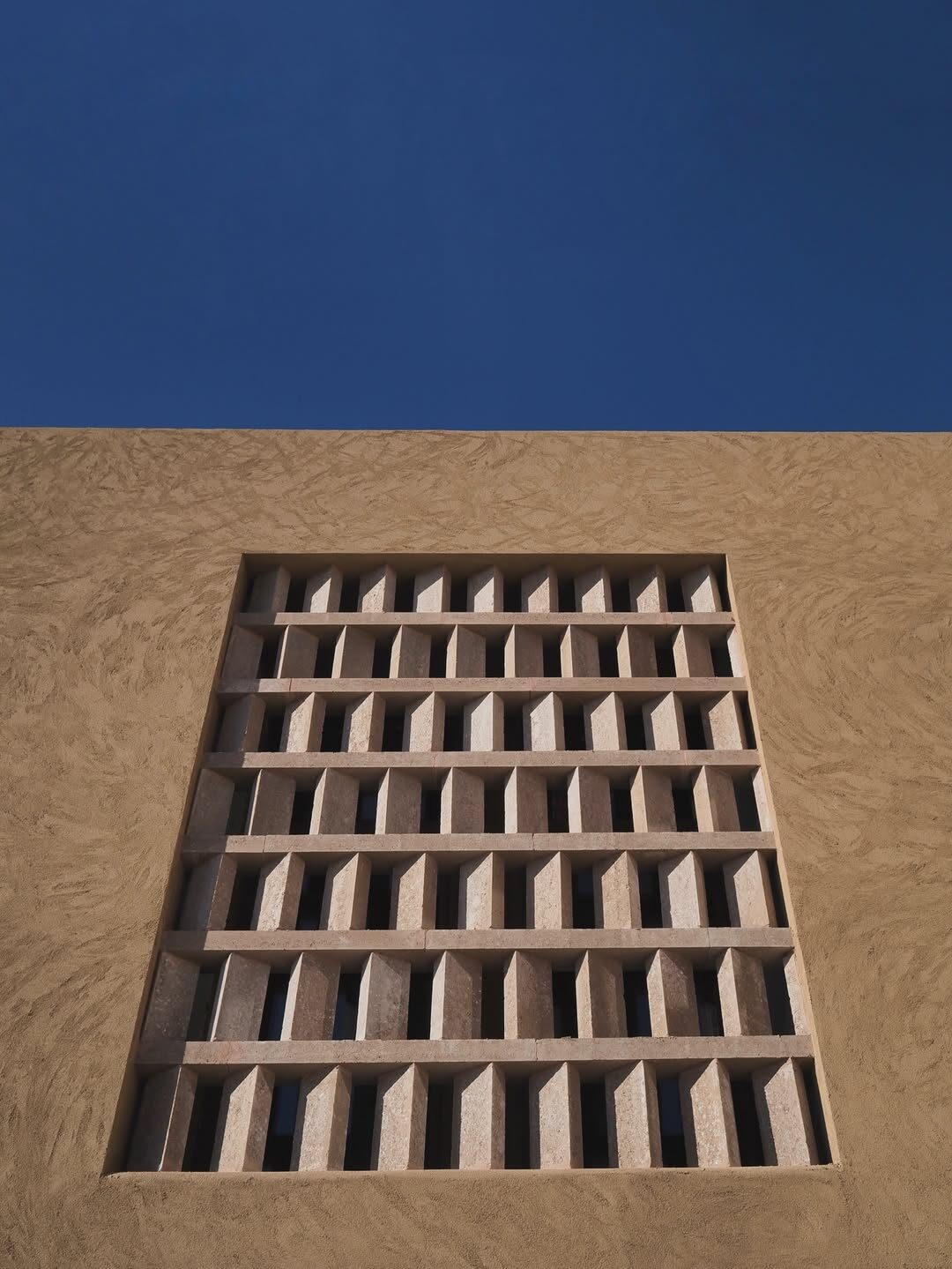
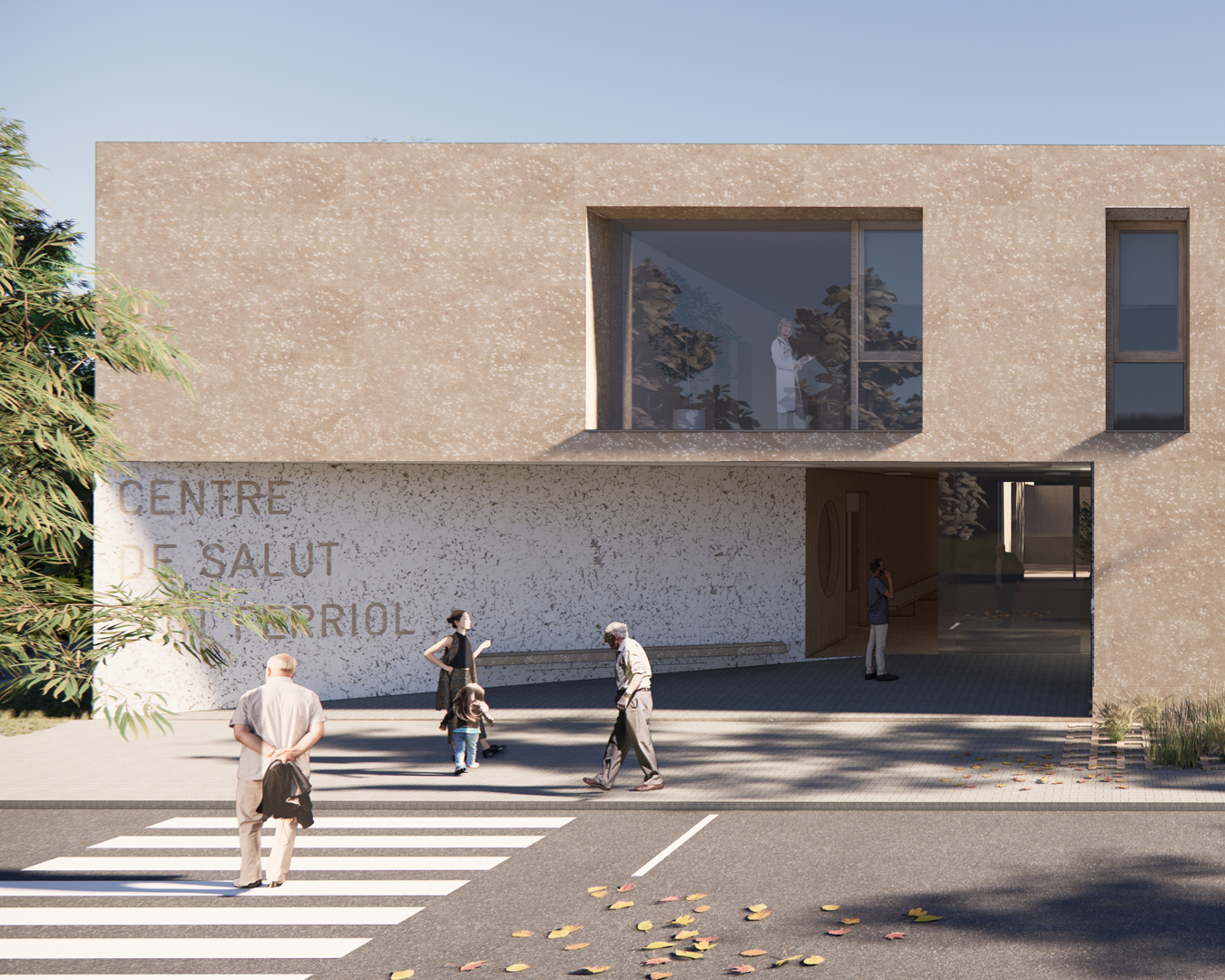
Land in a health center, the challenge of Son Ferriol
When we decided to use earth as the primary material for the Son Ferriol Health Center in Mallorca, we knew we would have to justify it. A healthcare environment has very specific requirements: asepsis, environmental control, durability. It’s not the place where one typically thinks of clay.
But that’s precisely where the challenge lay. And also the opportunity.
We didn’t do it for aesthetic reasons, although the visual warmth of clay is hard to ignore. We did it because physics supported it.
Why clay? A building that needs to breathe.
Most conventional wall coverings (like plastic paints or cement mortars) seal the walls. They’re airtight. And that comes at a price: the indoor air deteriorates, chemical compounds accumulate, and humidity becomes a problem that has to be solved with heavy machinery.
Clay works differently. Its open molecular structure allows it to exchange moisture with the environment continuously and naturally.
- It regulates relative humidity between 40% and 60%, the range in which viruses and bacteria have the most difficulty surviving.
- It stabilizes the temperature thanks to its thermal inertia, reducing dependence on mechanical air conditioning systems.
- It adsorbs odors and toxins from the air (the famous VOCs), something especially relevant in a building with high occupancy.In other words: clay is not a material of the past. It is a passive environmental management system that does not require electricity to operate.
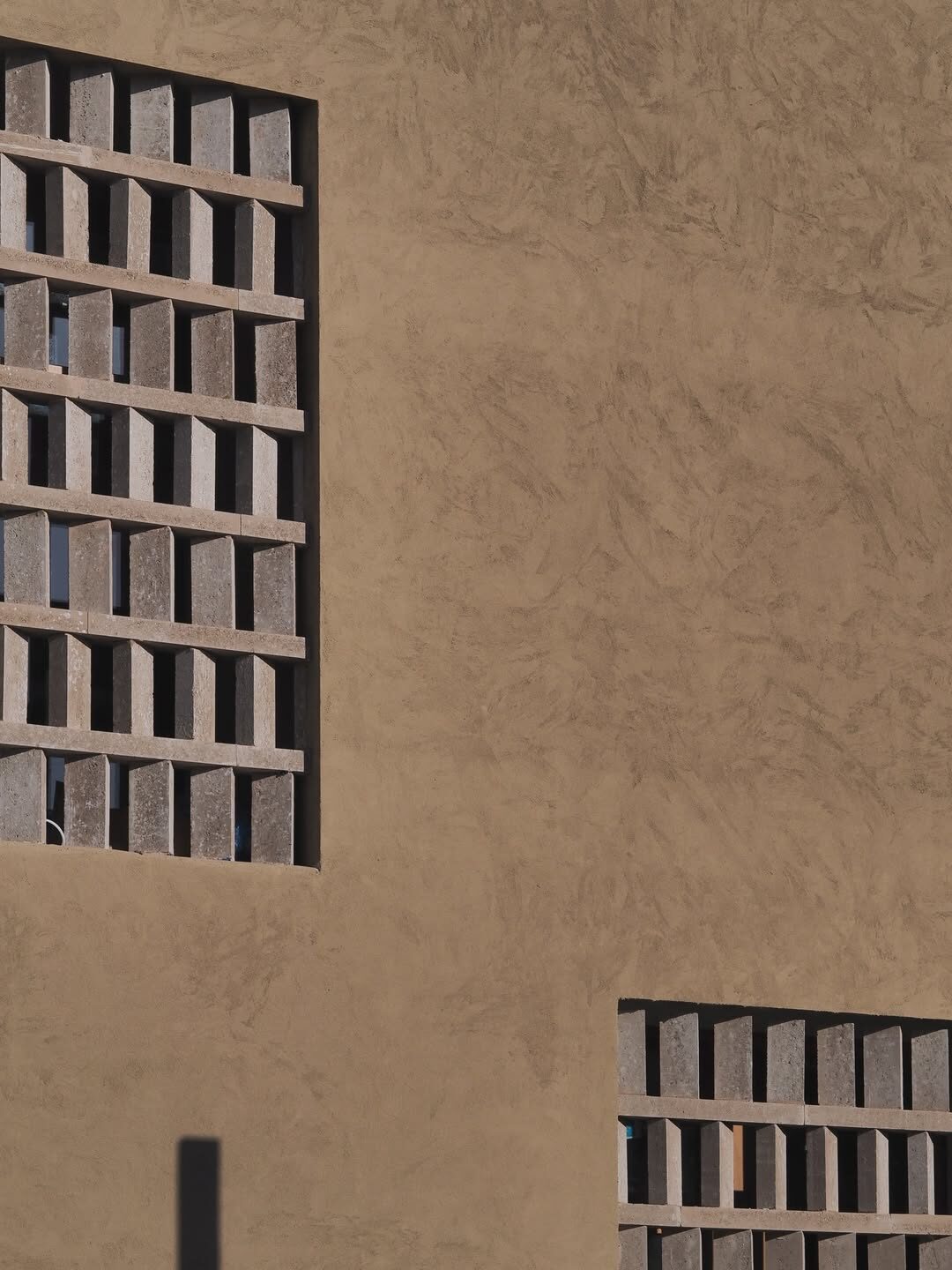
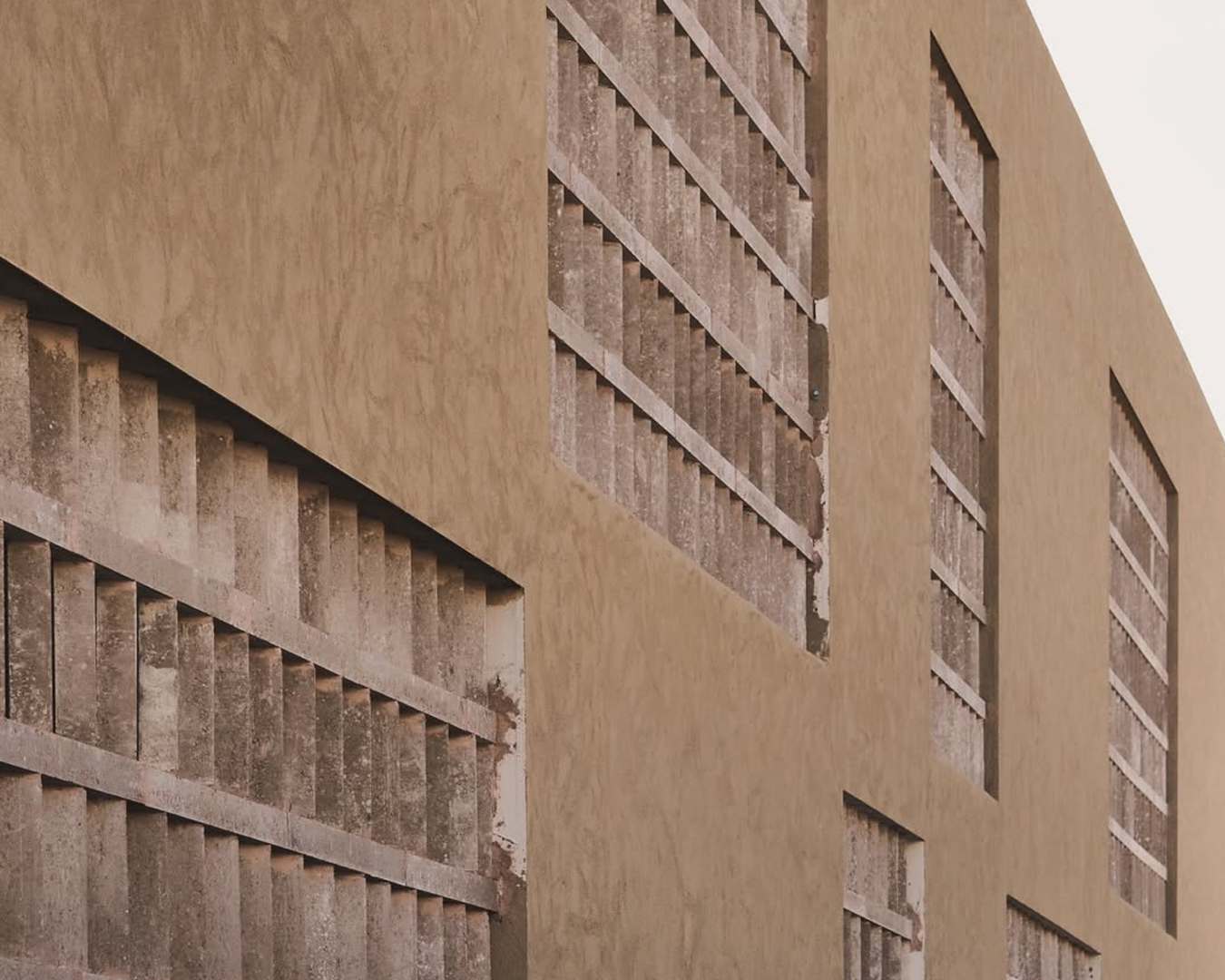
How we solved it: three layers, one logic
At Son Ferriol, the earth doesn’t appear in just one form. We use it in different densities and formats, each with a specific function.
1. Rammed Earth Block (REB) Latticework: The Exterior Skin
On the facade, the REB acts not as a load-bearing wall but as a filter. This latticework protects the interior from Mallorca’s direct sunlight while allowing constant cross-ventilation. The result is a play of light and shadow that humanizes a space that could otherwise feel cold and clinical. Earth protecting from the outside.
2. Clay Mortars Inside: The Touch of Health
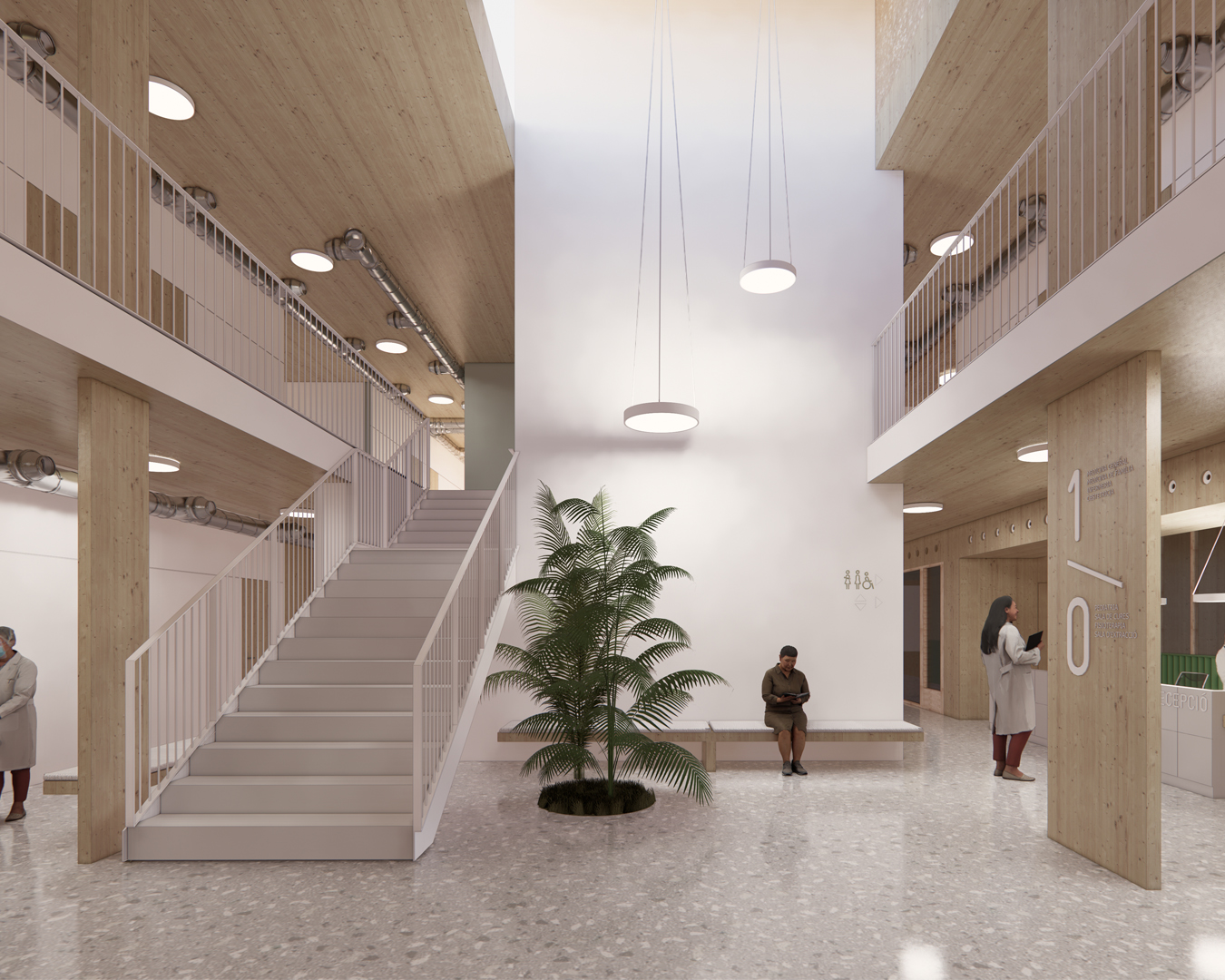
In the consultation and waiting areas, clay mortars cover the walls continuously. Because it is unfired, the clay retains its absorbent properties. No VOCs. No chemical additives. Just material in its most honest state.
3. Wooden Structure: The Silent Ally
Wood supports the entire system. And this isn’t just a structural or environmental decision: like clay, wood is hygroscopic. Together, they create a self-regulating system that responds to the climate without anyone having to press a button.
The question we get asked most often is, "Is it safe?"
Yes. And not only safe, but also compliant with regulations.
The main barrier we encountered (and which we want to overcome) was the belief that earth is a fragile or unhygienic material for a healthcare setting. The reality is quite different:
- Well-executed clay coatings have a durability comparable to industrial plasters, with the advantage that they are much easier to repair using the same materials.
- Clay naturally controls humidity, which hinders the growth of mold and mites without the need for biocides.
- The project strictly adheres to the public health and safety standards required by the authorities.
Some frequently asked questions:
Can BTC withstand rain without constant maintenance?
Yes. The blocks used outdoors have a specific density to resist erosion. Furthermore, the lattice design facilitates rapid drying and protects the material in the long term.
Do clay walls produce dust?
No. A professional application with the correct finish seals the surface without compromising its breathability. The wall becomes solid, warm to the touch, and free of crumbling.
Why not concrete?
Because concrete is watertight and has a huge carbon footprint. The combination of wood and earth allows the building to be self-sustaining, reducing energy consumption and improving the well-being of its inhabitants.
Build with common sense
Son Ferriol is more than just a health center. It’s a demonstration that public facilities can be built using local, low-impact materials that meet high technical standards, without compromising on any of the three.
At Laboqueria Arquitectura, we continue to explore how local raw materials can enhance the experience of living. Because ultimately, building well shouldn’t be the exception.