Flearchitecture in the World Capital of Architecture Barcelona 2026
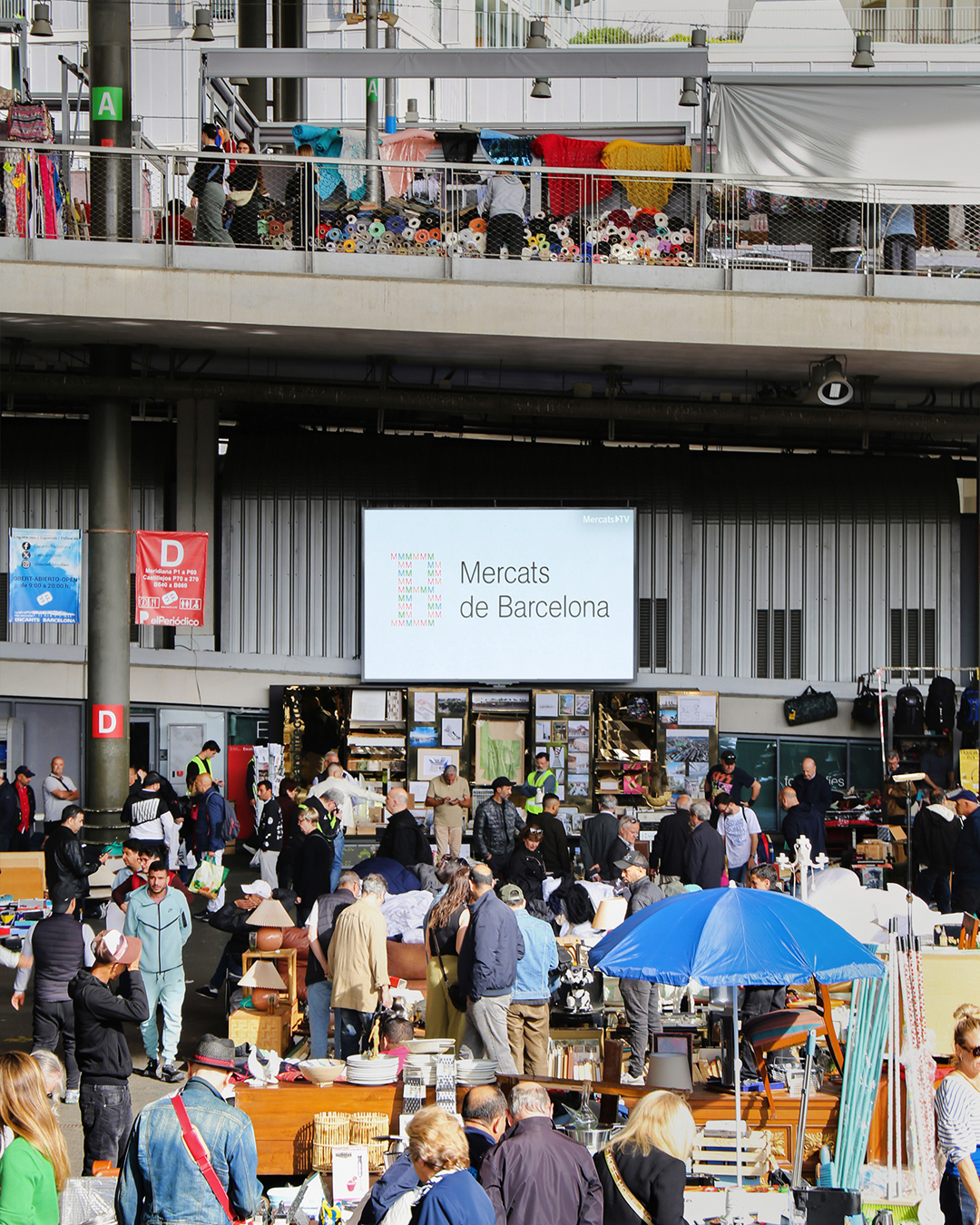
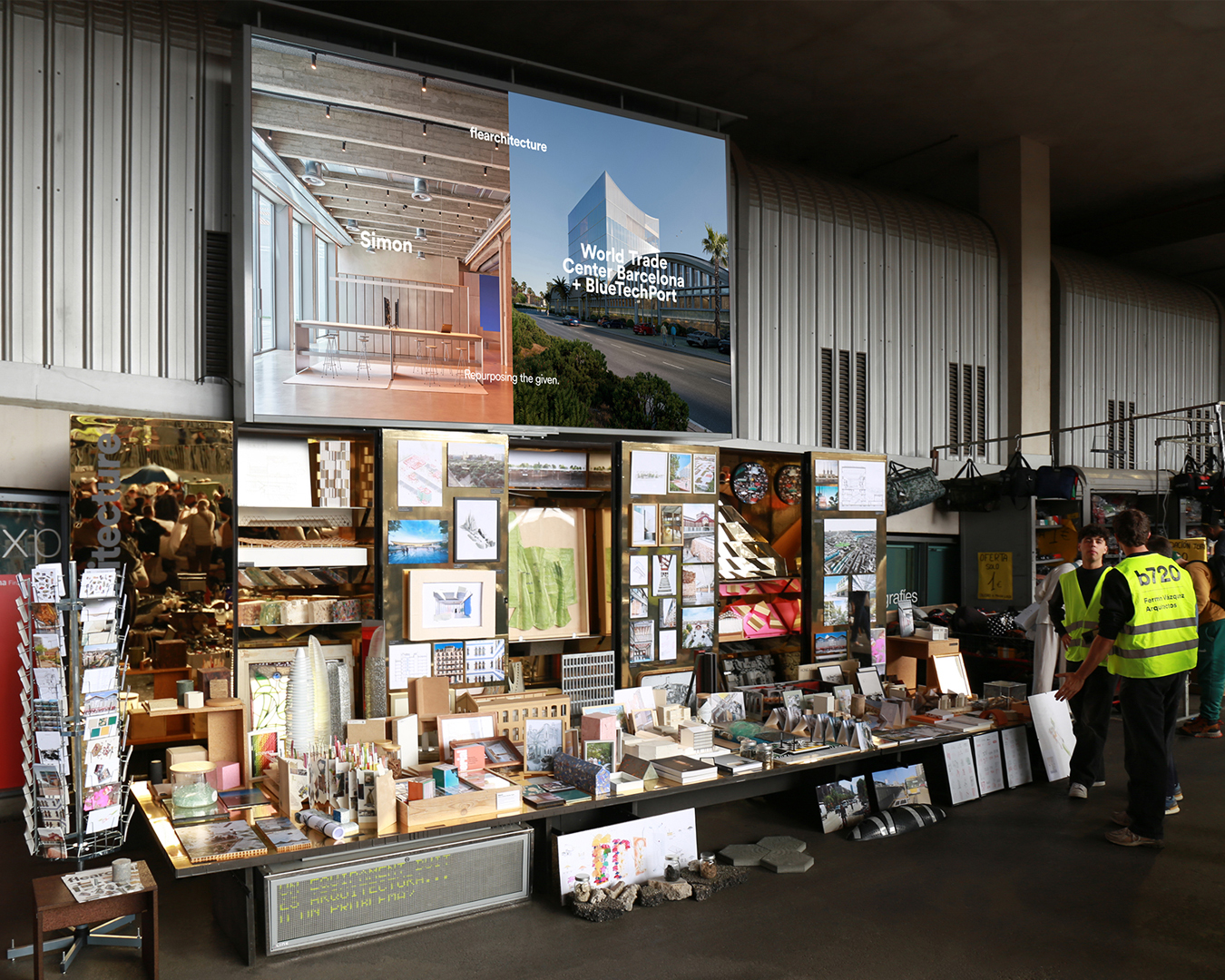
From April 17 to July 10, 2026, Barcelona’s Mercat dels Encants hosted Flearchitecture. Repurposing the Given, an exhibition initiated by b720 Fermín Vázquez Arquitectes as part of the Barcelona 2026 World Capital of Architecture program.
Conceived as just another market stall, the exhibition has brought together more than fifty architecture firms, institutions, companies, and educational centers to reflect on reuse, rehabilitation, urban regeneration, circularity, and memory as fundamental strategies of contemporary architecture.
Through objects, construction fragments, models, and images, Flearchitecture has offered a different perspective on so-called “second-hand” architecture, championing the value of existing buildings, materials, and resources, and exploring the possibilities of giving them new uses and extending their lifespan.
Experimental bricks made from recycled materials
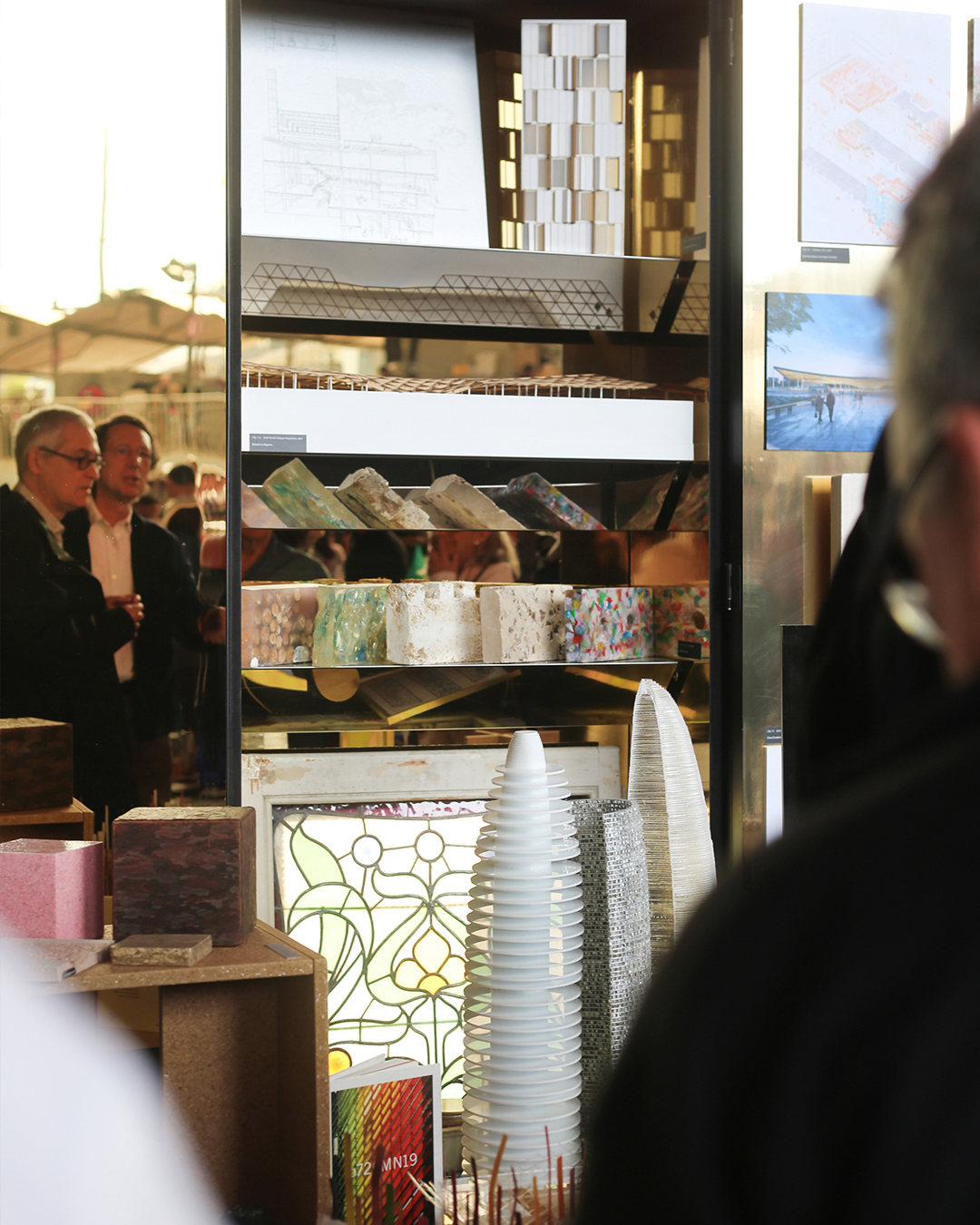
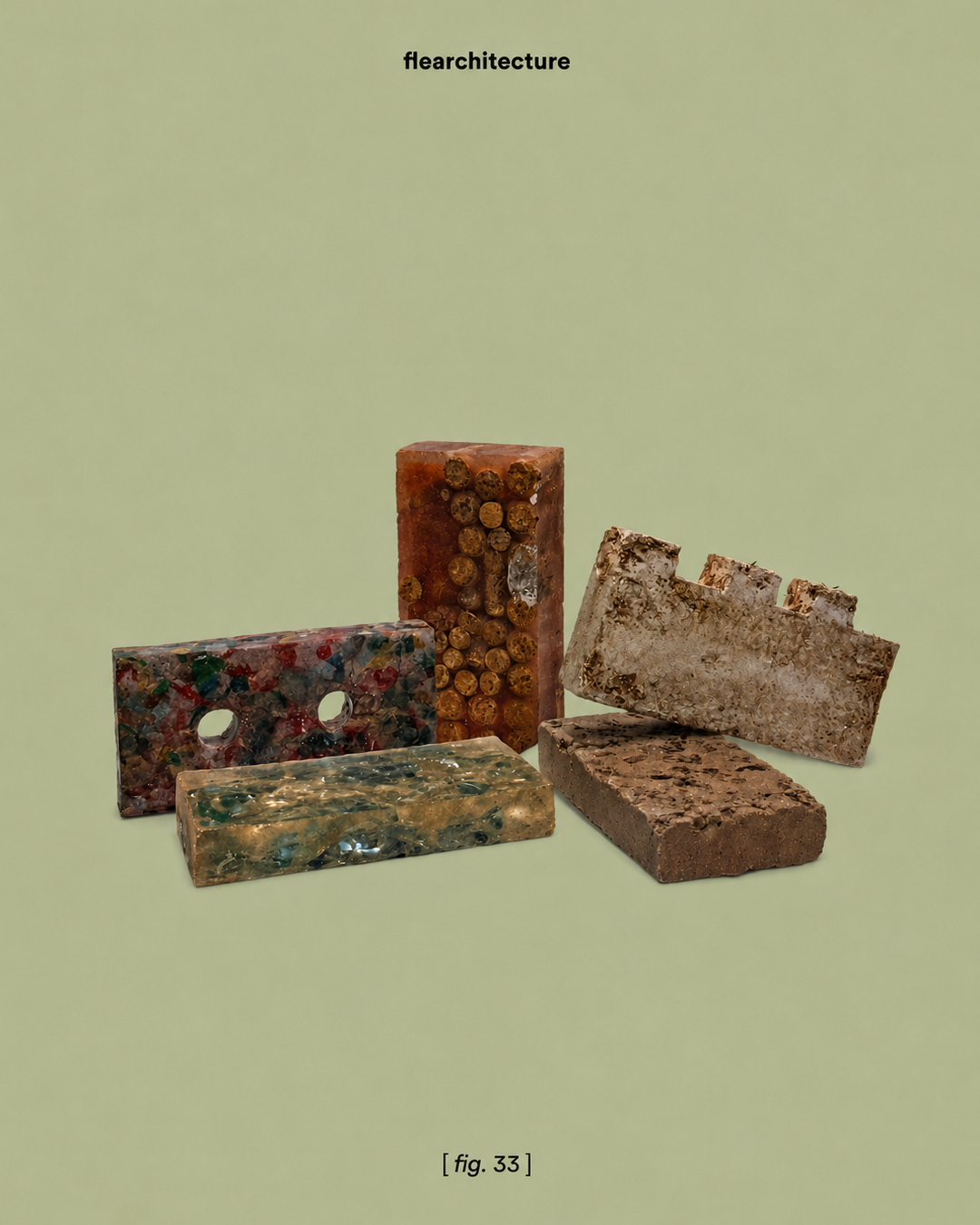
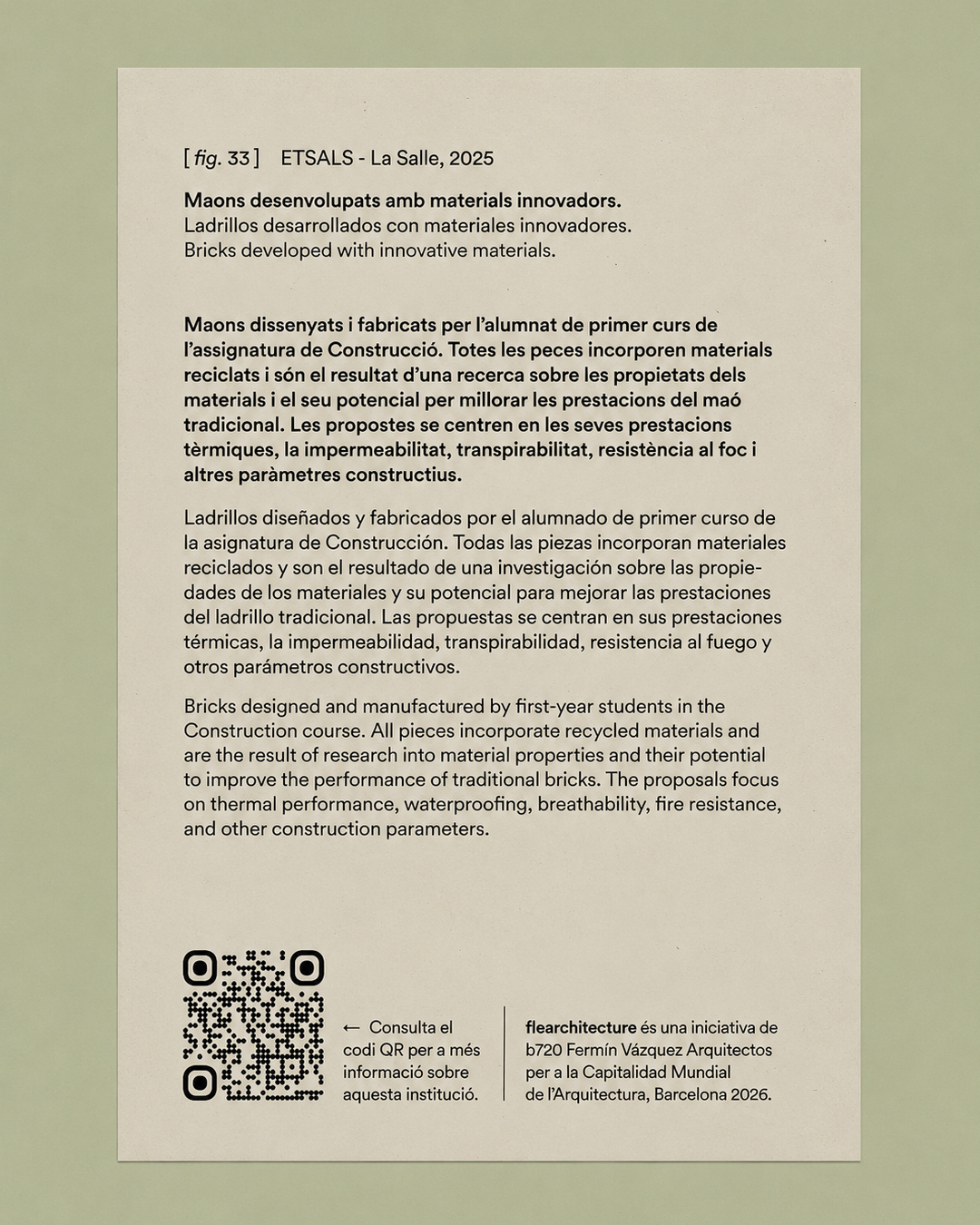
La Salle Architecture participated in the exhibition with a selection of pieces created by first-year students for the Construction Systems course, taught by Ricard Grau, a partner at Laboqueria Arquitectura.
The exhibited works are experimental bricks made from recycled materials, created as part of a course project focused on the study of materials, construction processes, and the environmental impact of construction products. Each proposal stems from research into material properties and their potential to improve upon the performance of traditional bricks, exploring aspects such as thermal behavior, impermeability, breathability, fire resistance, and other construction parameters.
The exercise involves designing and manufacturing the components, experimenting with various combinations of reclaimed materials, and analyzing their physical, structural, and environmental characteristics. In parallel, students develop an Environmental Product Declaration (EPD) and calculate the life cycle of each proposal, examining aspects such as material origins, the manufacturing process, resource consumption, and potential for reuse or recycling at the end of the product’s useful life.
The practical work allows for an approach to construction from a cross-disciplinary perspective, combining material experimentation with technical and environmental analysis. In this way, students not only work on the form or performance of the components but also learn to quantify their impact and make more informed construction decisions.
Teaching, experimentation, and the circular economy
The inclusion of these projects in Flearchitecture highlights the value of teaching as a space for experimentation and research—one capable of proposing new ways to use resources and questioning conventional manufacturing processes for construction materials.
This approach aligns directly with Laboqueria Arquitectura’s architectural philosophy, in which the reuse of existing materials, renovation, and the circular economy are integral to their standard design strategies.
This line of work is also pursued through REDÓ, a research project that promotes material recirculation based on “cradle-to-cradle” principles, aiming to rethink, reuse, refurbish, and rebuild in order to reduce the environmental impact of construction processes.
The bricks on display reflect this same perspective: viewing materials not as waste, but as resources that can be integrated into new production processes and given a new life in architecture.
Participation in initiatives like Flearchitecture strengthens the ties between academia, the profession, and society, while enabling future professionals to adopt a construction approach that is more responsible, critical, and conscious of the value of existing resources.