Community climate shelter in Raval
By the technical team of Laboqueria Arquitectura, specialized in cooperative architecture, community participation and development of social and environmental impact projects since 2009
This summer, L’Ombra, a community climate shelter conceived as a space for rest, meeting and protection from the increasingly intense effects of heat in public spaces, has been installed in Raval.
The initiative is part of a broader process driven by La Traginera, the Urban Community of the Ciutat Vella district, together with Impulsem and the Fundació Tot Raval, which explores new forms of collective management of urban resources and community response to the climate and energy challenges of the neighborhoods.
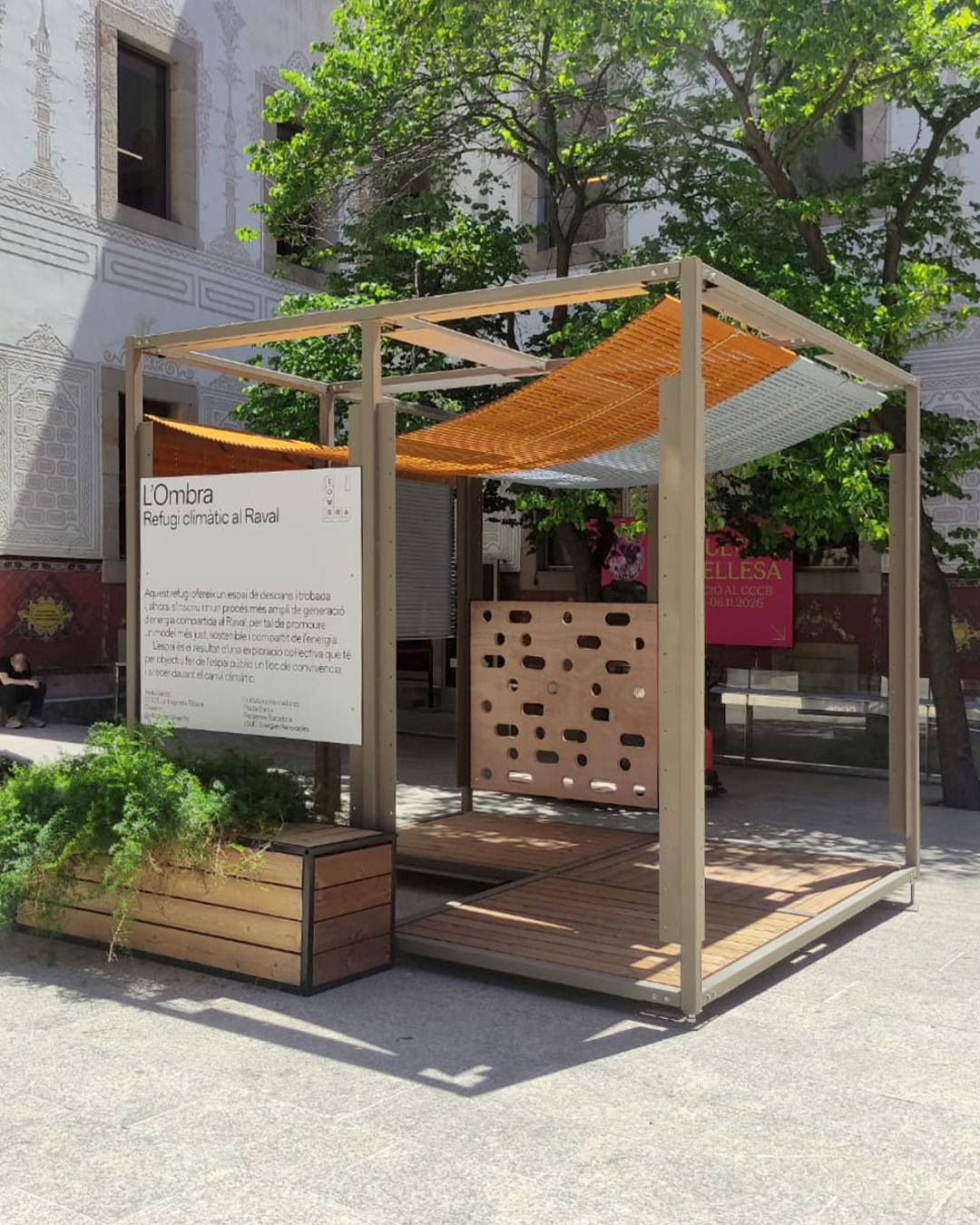
Beyond its immediate function as a shaded space, the project raises a fundamental question: how can we build neighborhood infrastructure that is useful for daily life, shared by the community, and capable of responding to the impacts of climate change?
L’Ombra is also a first step in a broader process aimed at the shared generation and governance of energy in the Raval neighborhood. In this sense, the shelter is understood as a commons infrastructure: an open, shared structure available to address the neighborhood’s diverse collective needs.
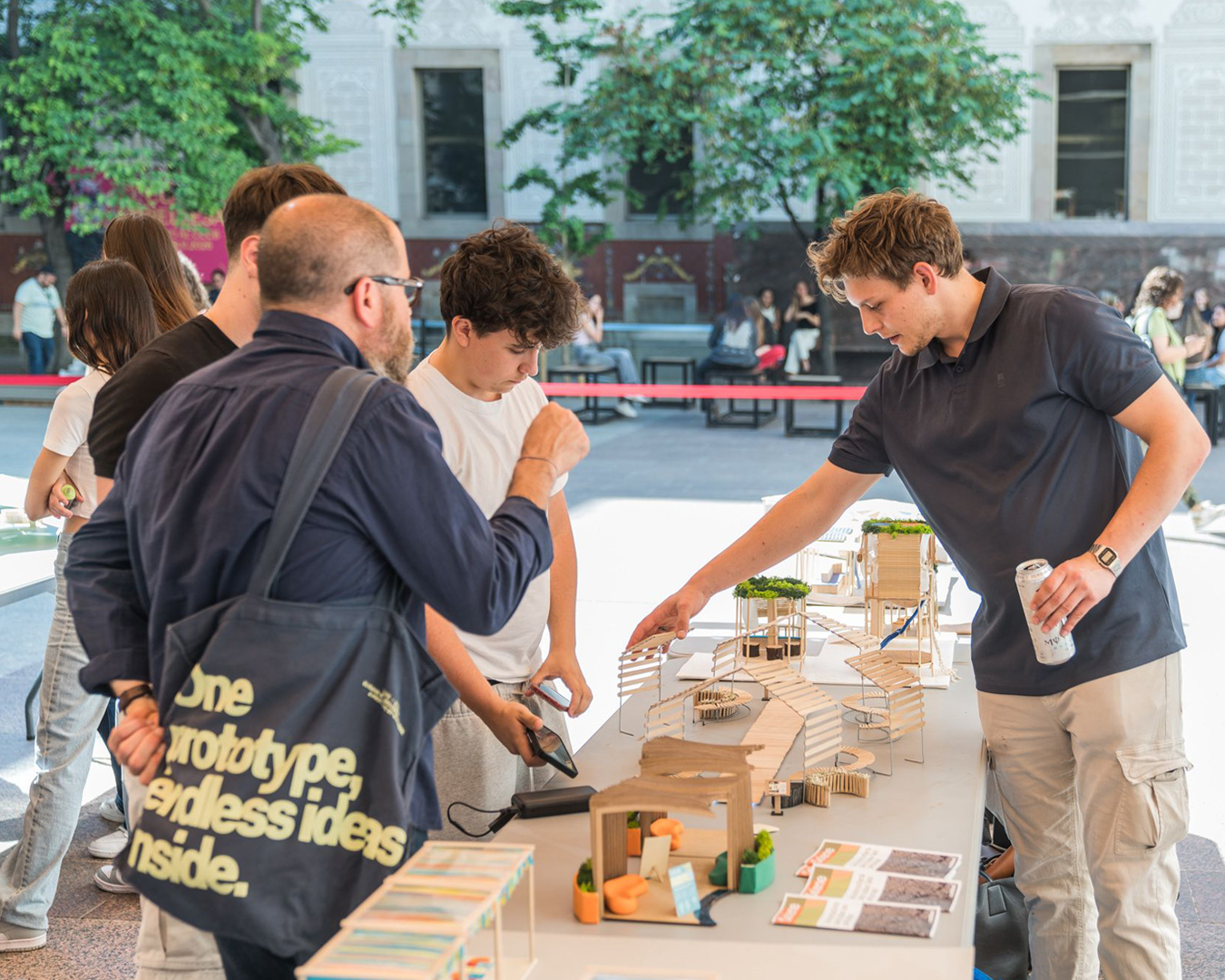
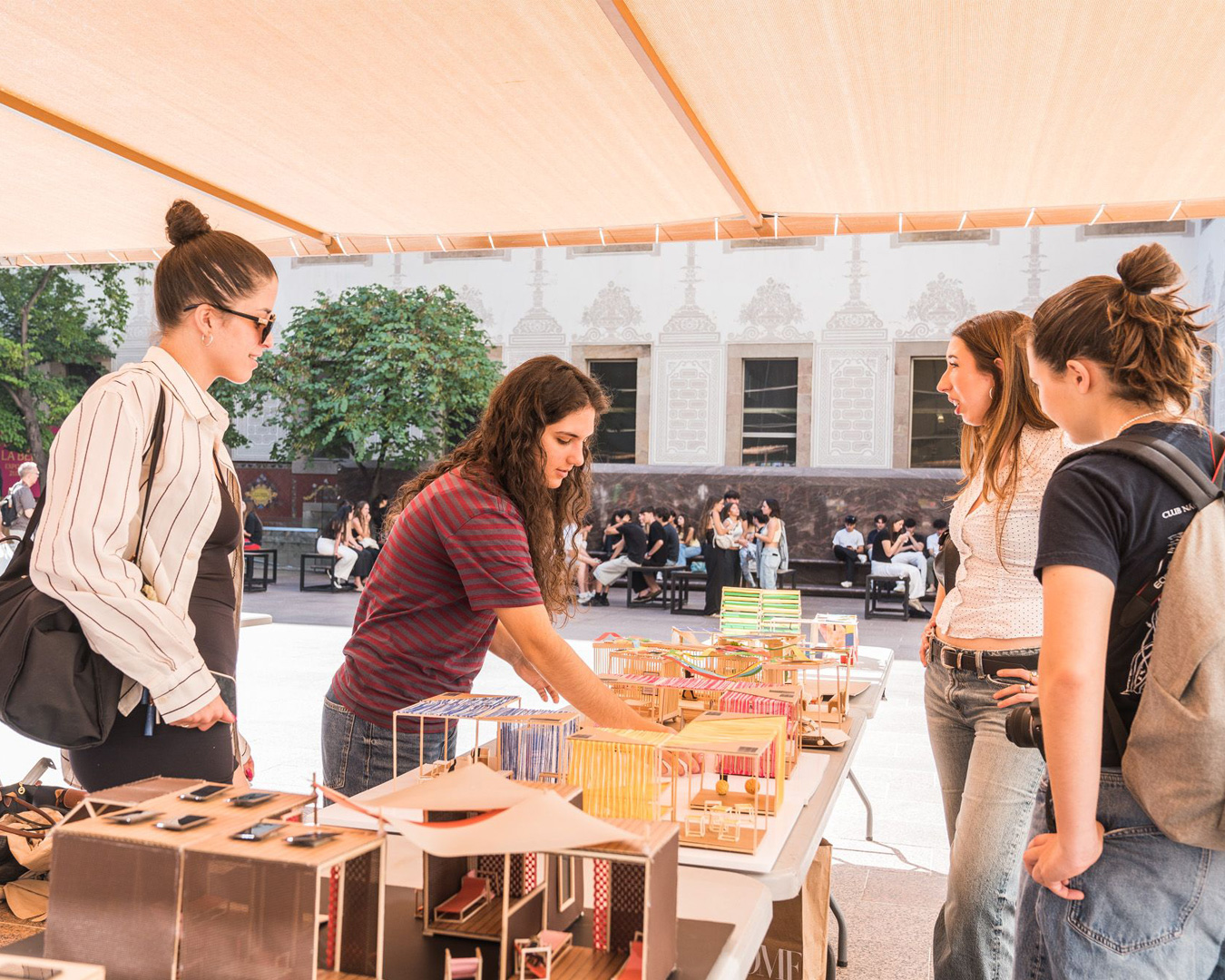
The project involved first-year students of the Bachelor’s Degree in Design and Innovation at Elisava University, who explored new ways of inhabiting, sharing, and caring for public space. Through research and prototyping processes, the students imagined devices and situations capable of providing climate comfort while fostering new relationships between people and their environment.
This experimental dimension transforms the shelter into more than just a solution to the heat. This is a collective exercise that brings design, community and sustainability into dialogue, understanding public space as a place of coexistence and mutual care in the face of the effects of the climate emergency.
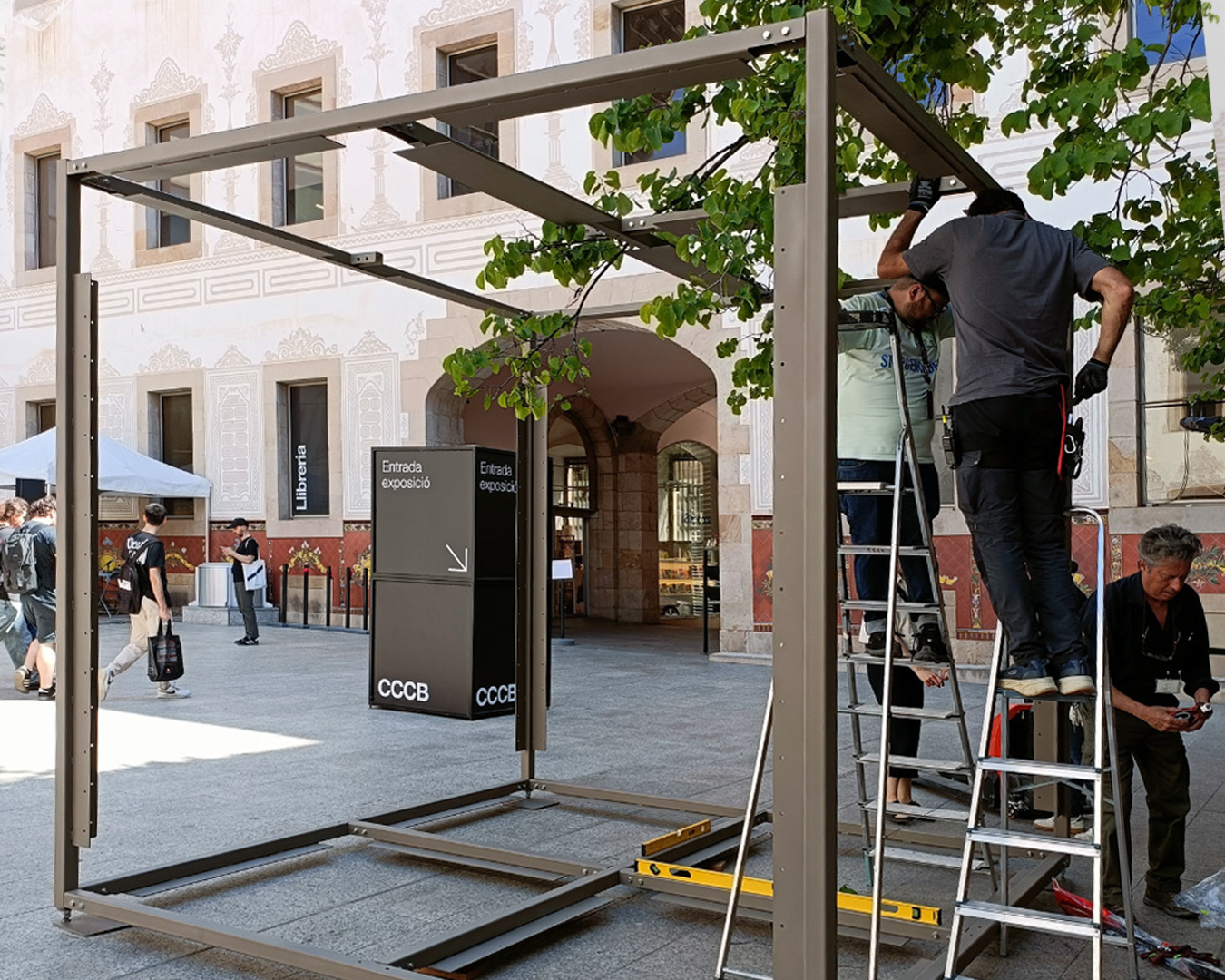
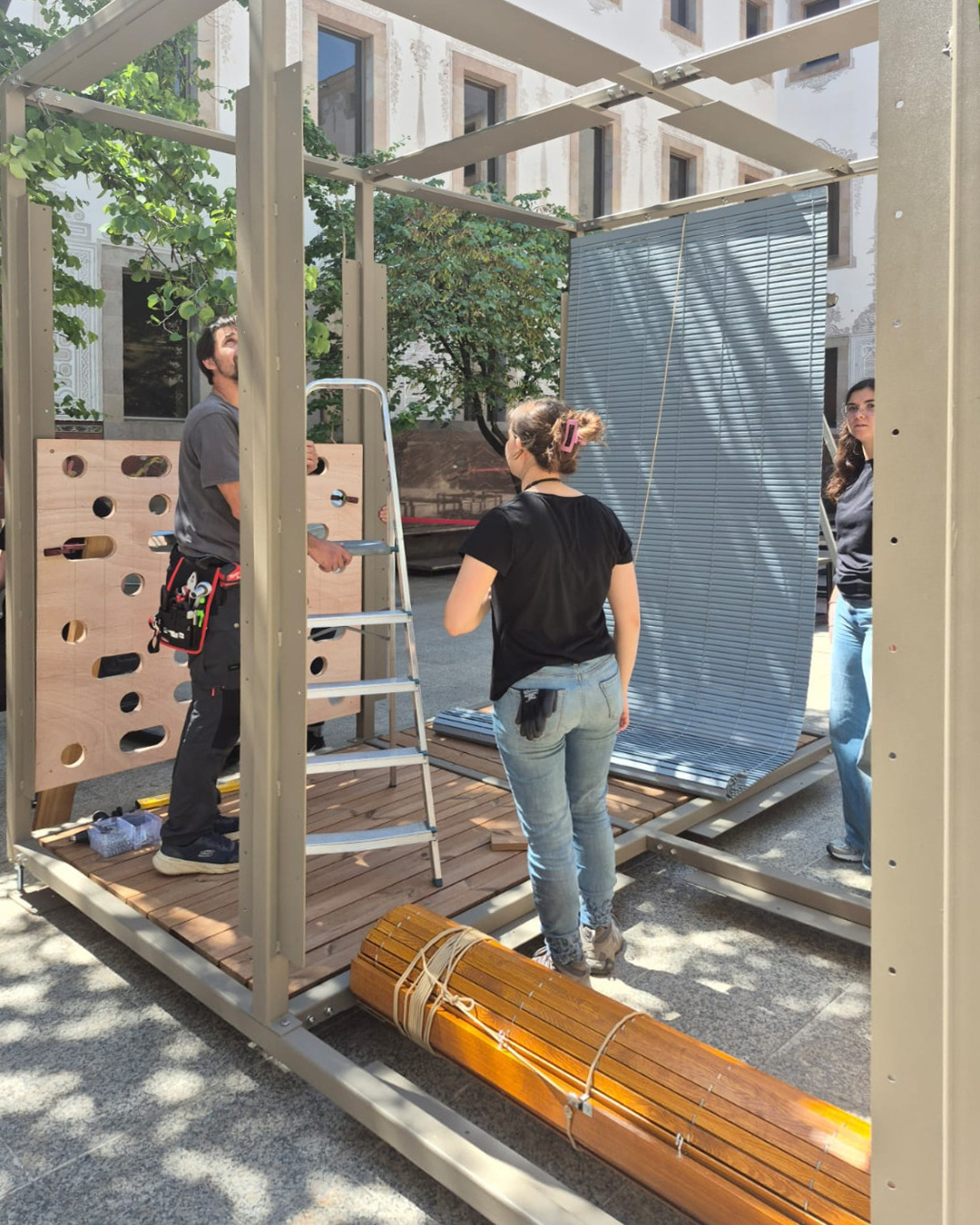
At Laboqueria Arquitectura, we have actively participated in the development of this project, coordinating the training, directing, and executing the process. Our role has been to support the research and learning process undertaken by the students, facilitating the connection between academic reflection, the needs of the local area, and the realization of a real-world intervention in the public space.
We understand climate shelters not only as a technical solution to high temperatures, but also as an opportunity to strengthen community ties, promote co-responsibility in the use of resources, and test new forms of collective adaptation to climate change.
The project has been developed in collaboration with the CCCB and students from Elisava, based on a design by Berta Bigas within the framework of the Ephemeral Shading program, and with the support of Pla de Barris de Barcelona, Persianes Barcelona and SUD Renovables. It has also joined the Xarxa de Refugis Climàtics de Barcelona, a municipal initiative that has more than 500 spaces distributed throughout the city to offer thermal comfort and protection against episodes of extreme heat.
This experience reinforces a line of work that we have been developing for years: understanding architecture as a tool to face social and environmental challenges through cooperation, participation and roots in the territory. Through initiatives promoted by La Traginera, we continue to explore how architecture, energy and care can be articulated to build more resilient, inclusive and sustainable neighborhoods.