Competition for the new Saint-Aubin school complex
We are pleased to announce that Laboqueria Arquitectura, together with Diego Carrión Lobo, has participated in the competition for the new school complex in Saint-Aubin, Switzerland.
The proposal envisions a new educational complex integrated into the rural landscape and the historical context of the village, with the aim of strengthening the relationship between architecture, public space, and community. The project incorporates new school buildings and the renovation of an existing farmhouse, creating a coherent complex capable of evolving over time and adapting to the future needs of the municipality.
Implantación y relación con el contexto
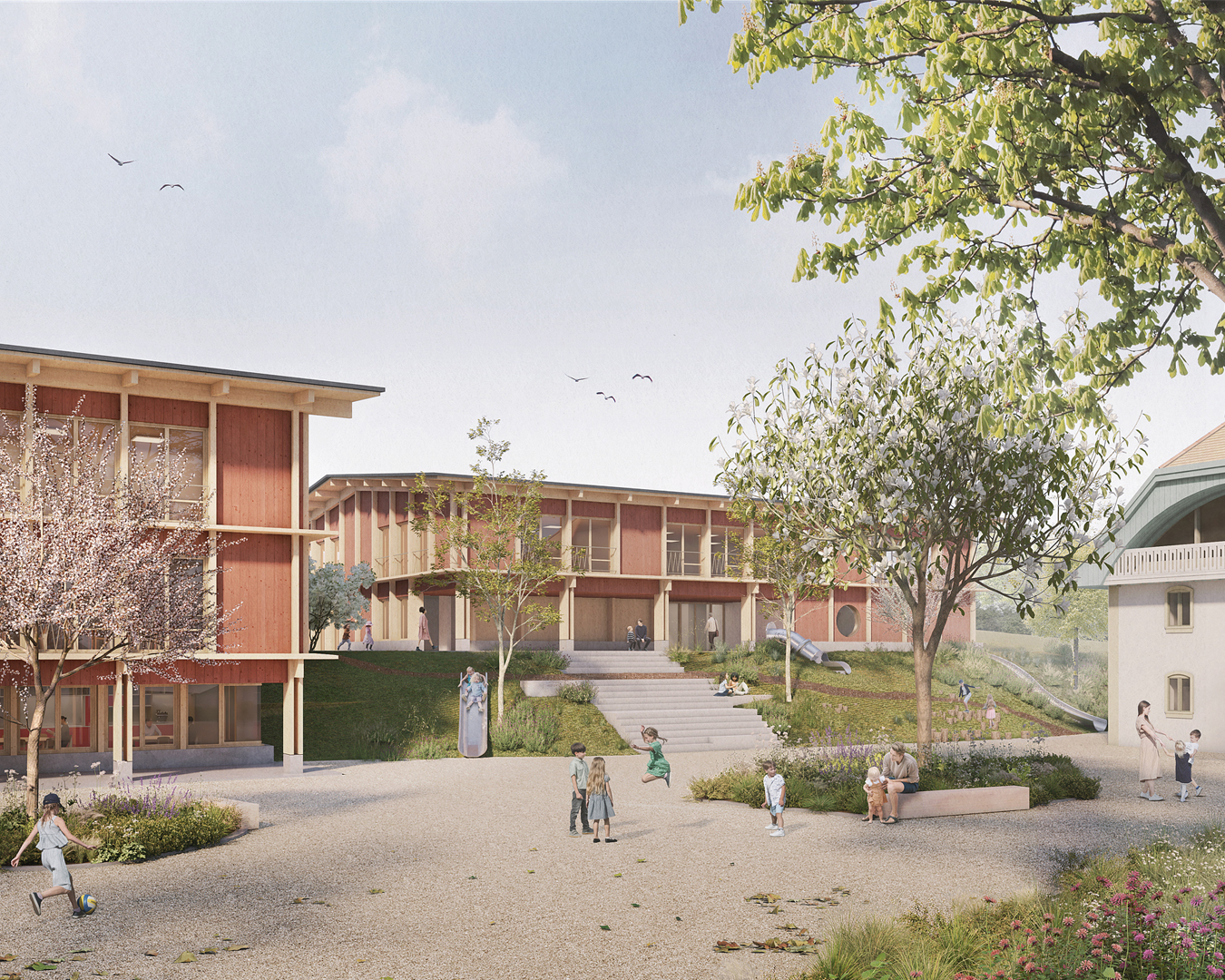
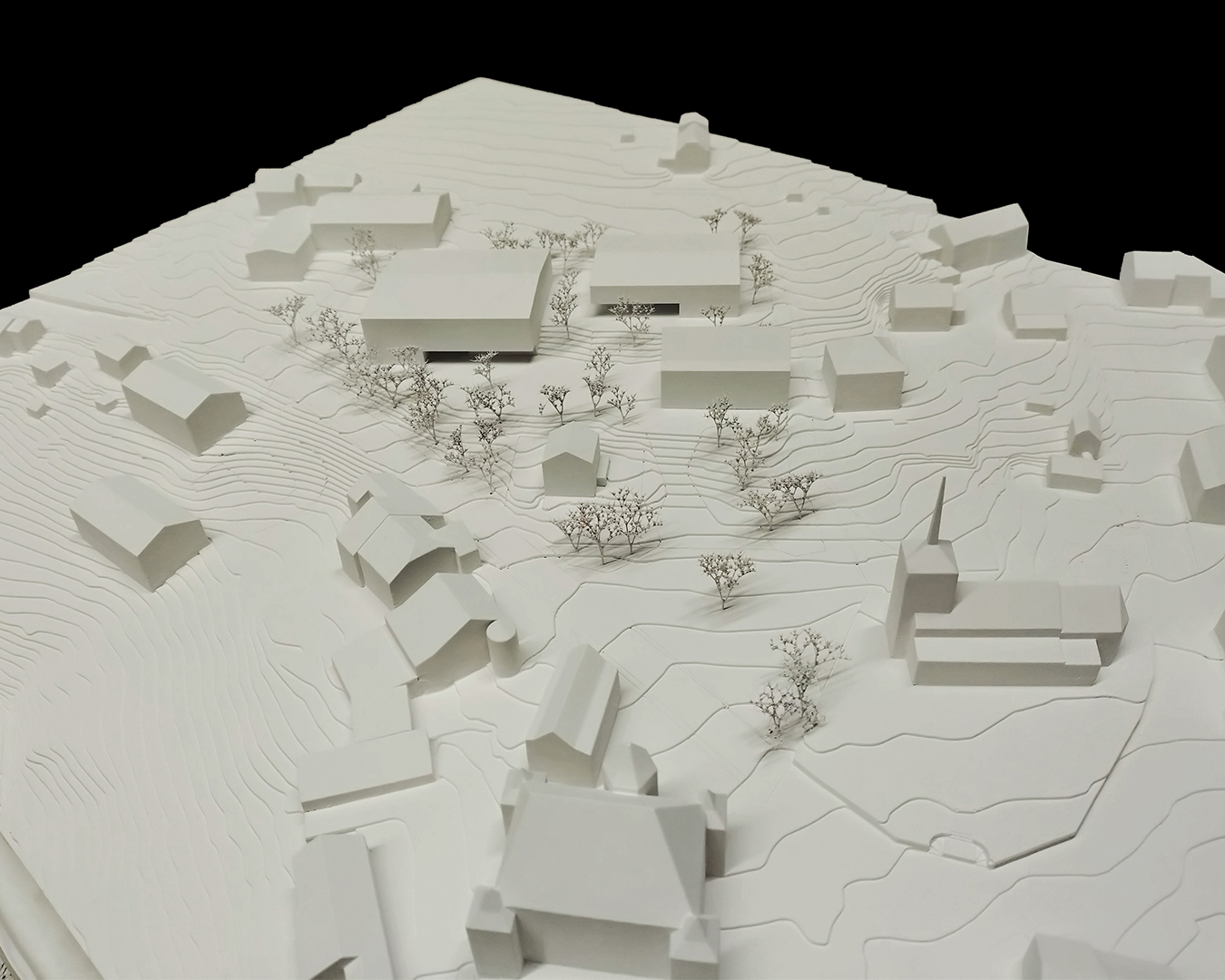
The new school complex is located in the heart of the village, near landmark buildings such as the church, the Château, the rectory, and the main square. The new structures blend seamlessly into the landscape, reinforcing the historical and rural character of the site.
The buildings adopt a domestic and compact scale, with gabled roofs that allow for a natural integration into the sloping terrain and the existing built environment. The design seeks to establish continuity with the village’s traditional architecture, avoiding excessive gestures and prioritizing a balanced relationship with the surroundings.
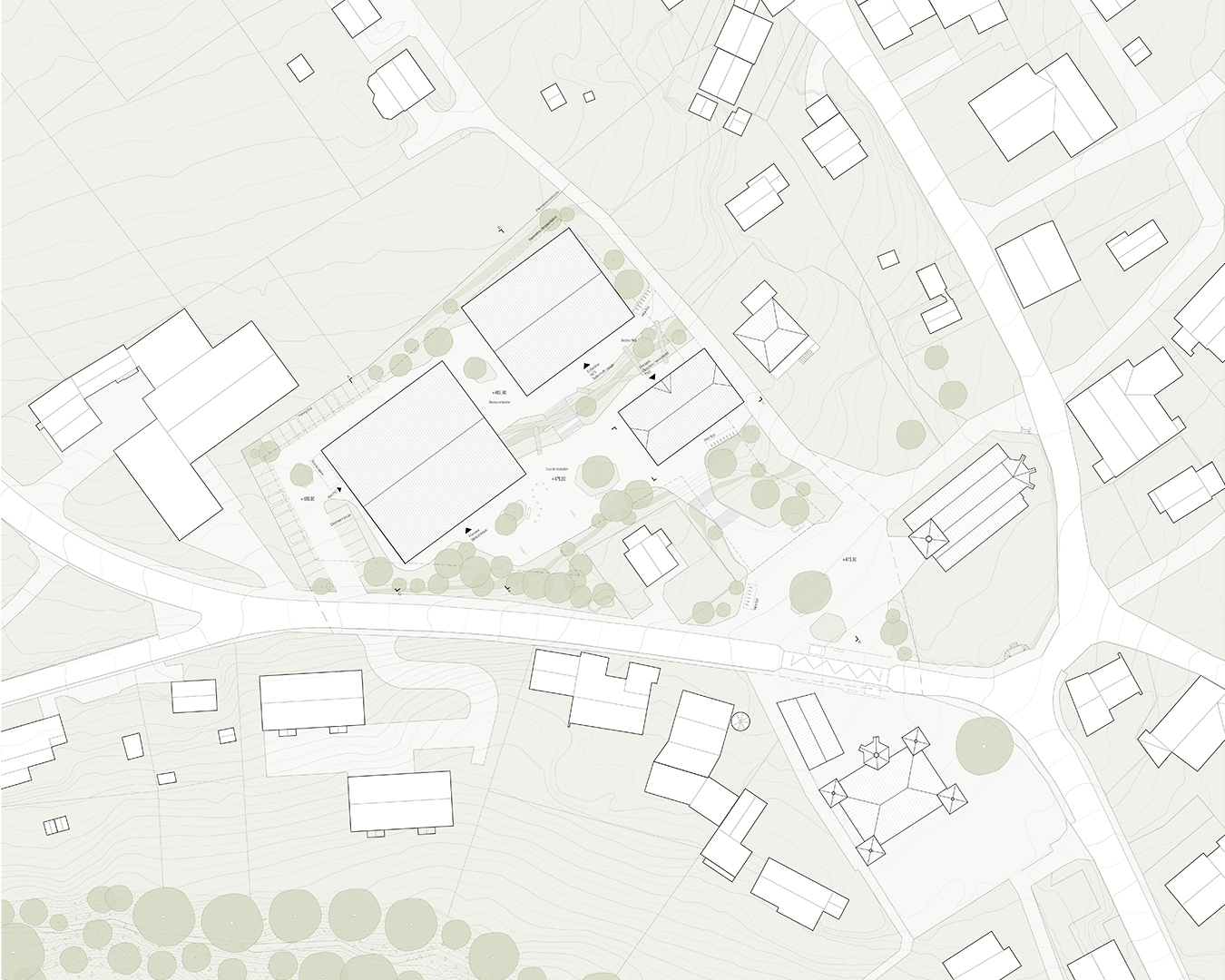
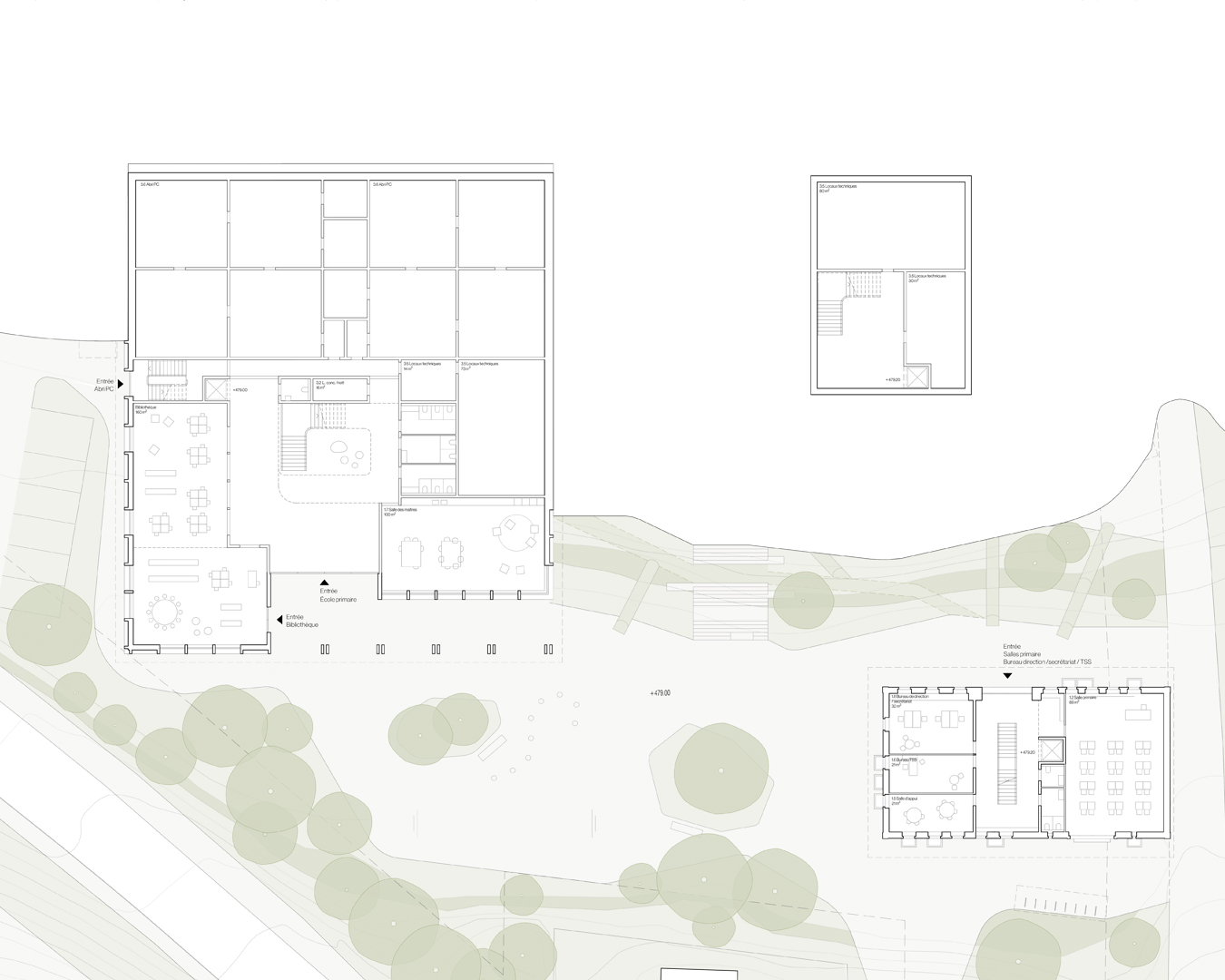
The complex is organized around the schoolyard, which serves as a central space for interaction and gathering. From this central area, different outdoor spaces are defined, linked to educational uses: play areas, more intimate spaces for the preschool, seating areas, and green spaces integrated into the existing topography.
The treatment of the trees, permeable paving, and gardens recaptures the rural essence of the former orchards and gardens that once occupied this site, while simultaneously promoting biodiversity and the overall environmental quality of the complex.
Functional organization and educational spaces
The project distributes the different educational programs clearly and efficiently. The primary school is located in the new building to the west and in the renovated old farmhouse, while the preschool occupies a separate building to the north of the site, in a quieter area protected from traffic.
Access to the buildings is from the central courtyard via spacious south-facing porches, which offer sheltered spaces and open views of the landscape and the Château.
The renovation of the old farmhouse preserves the heritage value of an emblematic building and adapts it for new educational and administrative uses. The project maintains as much of the existing structure as possible and proposes targeted interventions to improve its functionality, comfort, and accessibility.
Mobility and phased development
The proposal incorporates a phased development strategy that allows the school to remain operational throughout the construction process, without reducing the number of available school places.
The first phase involves the construction of the new building for the preschool. Subsequent phases include the construction of the new primary school building and, finally, the renovation of the old farmhouse.
The project also redefines the relationship with the public space and mobility in the area. The town square is envisioned as a new meeting place connected to the school, with safe and easy routes for children, pedestrian-friendly traffic, and new gathering areas for the community.
Sustainable architecture and climate comfort
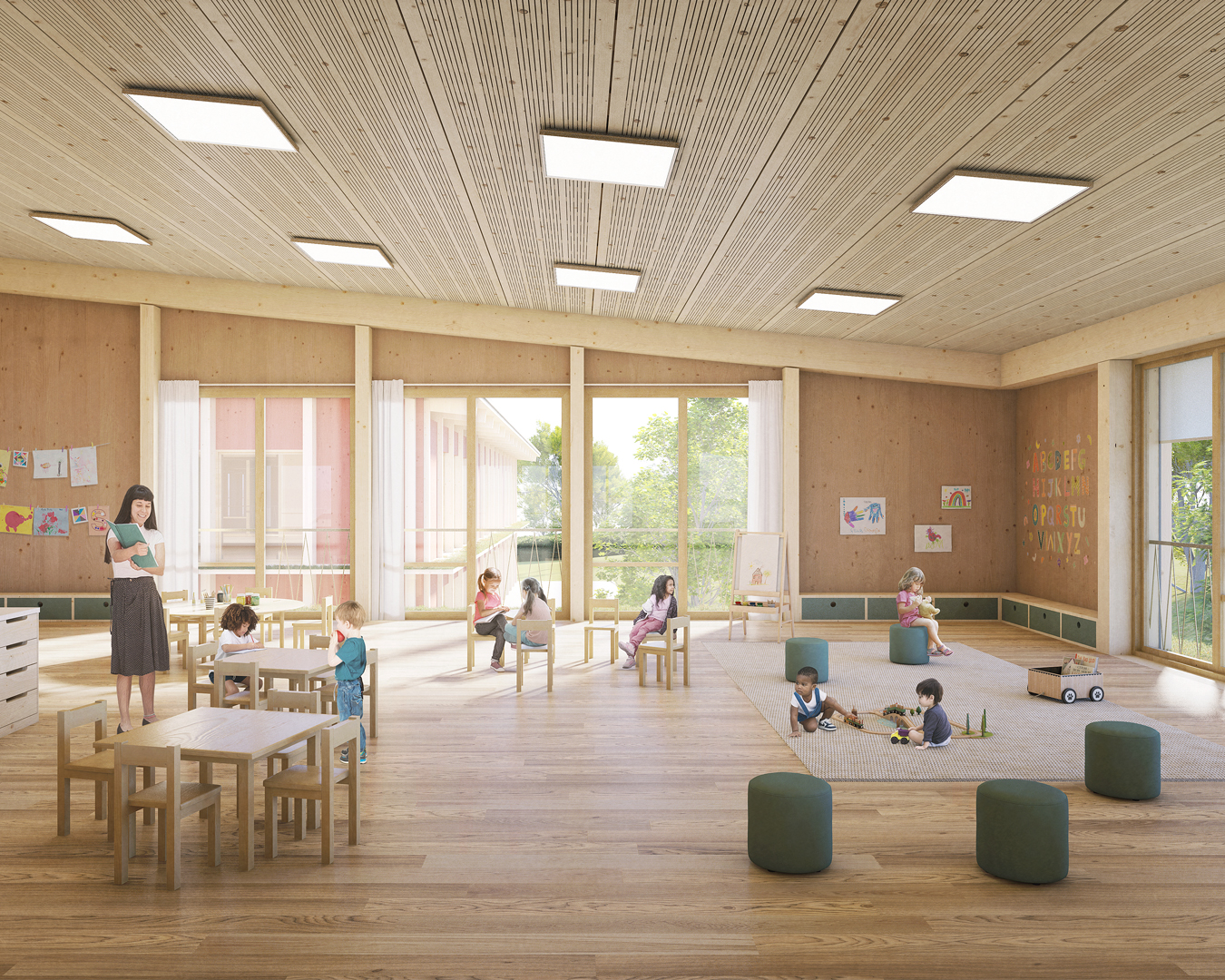
The proposal is based on passive bioclimatic principles and the use of local, healthy materials. Construction with prefabricated solid wood reduces construction time and optimizes resources, while elements in contact with the ground are made of concrete to ensure durability and fire protection.
The project embraces a low-tech architecture, with simple and understandable systems that prioritize natural ventilation, passive lighting, and climate comfort in the interior spaces. The layout of circulation routes, openings, and common areas promotes cross-views, orientation, and a constant connection with the surrounding landscape.
The proposal envisions a flexible and adaptable architecture, capable of supporting the future evolution of the school and strengthening the link between education, landscape, and community.